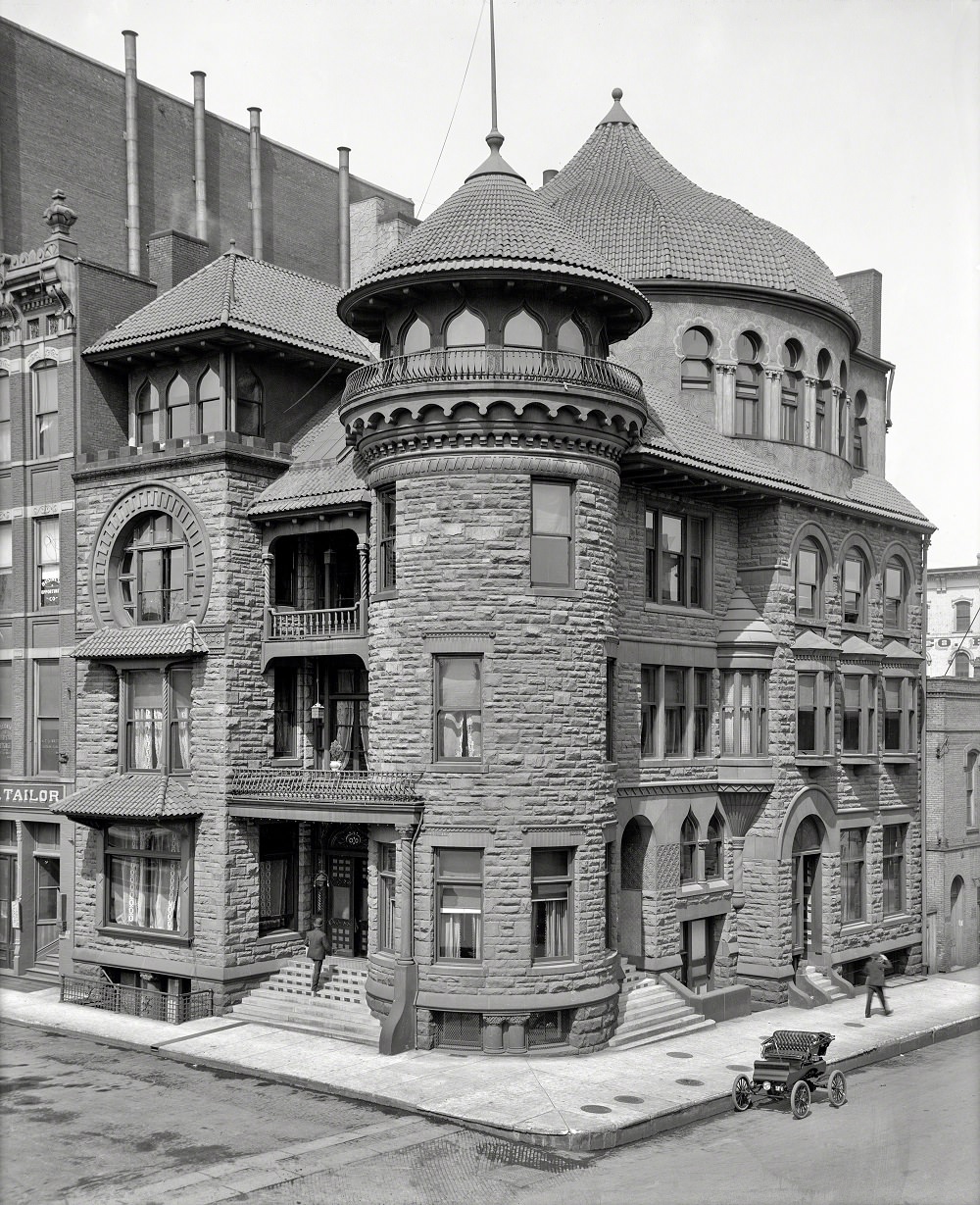
Rising from a Memphis street corner, the Tennessee Club makes an unforgettable early‑20th‑century statement in stone and tile. Its rounded turret, deep balcony, and textured masonry speak to the era’s taste for bold, Romanesque-inspired architecture, while the varied window shapes and decorative arches add a sense of ceremony to the façade. Even without stepping inside, the building reads as a place meant for gathering—distinctive, imposing, and carefully designed to be noticed.
Details in the streetscape help place the scene around 1906, from the open-top automobile parked at the curb to the pedestrians moving along the sidewalk. Utility lines and neighboring commercial buildings frame the club in a dense downtown setting, suggesting a district where business, social life, and city infrastructure pressed closely together. A “TAILOR” sign at street level hints at the everyday commerce that surrounded prominent institutions like this.
For readers interested in Memphis history, the Tennessee Club photo offers a crisp window into how the city looked and felt in the years when cars were new and architecture still proclaimed civic ambition. The image rewards close viewing: the curve of the entry steps, the rhythm of the stonework, and the layered rooflines all contribute to a sense of urban confidence. As a historical photograph, it stands as a compelling record of place and people—an era preserved in brick, shadow, and street life.