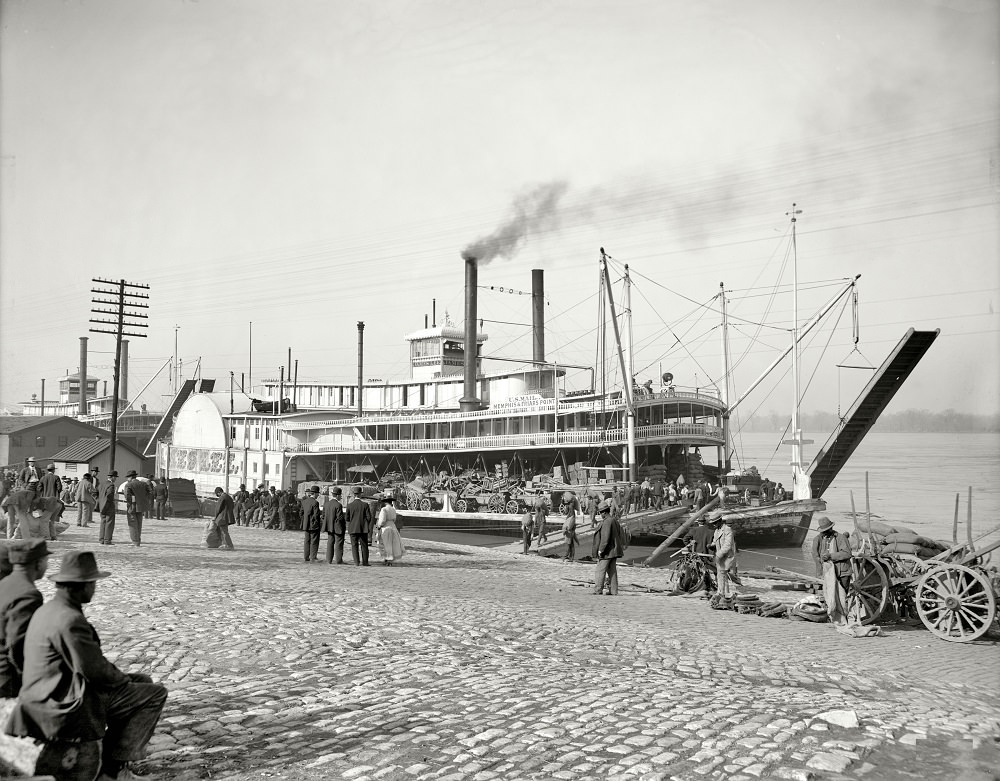
Along the Memphis riverfront, the Mississippi River packet **James Lee** sits at the landing, her tall stacks sending a thin plume of smoke into the sky while rigging and booms frame the busy deck. The broad gangplank and cluttered freight area hint at constant motion—cargo shifting, passengers funneling aboard, and crew keeping time with whistles and schedules. In the background, the river stretches wide and calm, a reminder that this waterfront was both a local workplace and a gateway to the interior.
Crowds gather on the cobblestone wharf, dressed in early-20th-century streetwear and clustered in small knots that suggest arrivals, departures, and quick business at the edge of the water. Wagons and hauled goods wait near the boat, underscoring how packet steamers connected farms, towns, and markets long before trucks dominated regional transport. Even without hearing the calls and creak of ropes, the scene reads like a snapshot of river commerce at full stride.
Memphis, Tennessee, circa 1910, was a place where rail lines and the Mississippi met, and photographs like this preserve the practical choreography of a working port. The **James Lee** embodies the era when river packets carried people, produce, and mail in a steady rhythm that shaped everyday life along the Mississippi River. For historians, genealogists, and fans of steamboat history, the details—vessel profile, dockside equipment, and waterfront crowd—offer a vivid window into a transportation world on the cusp of change.