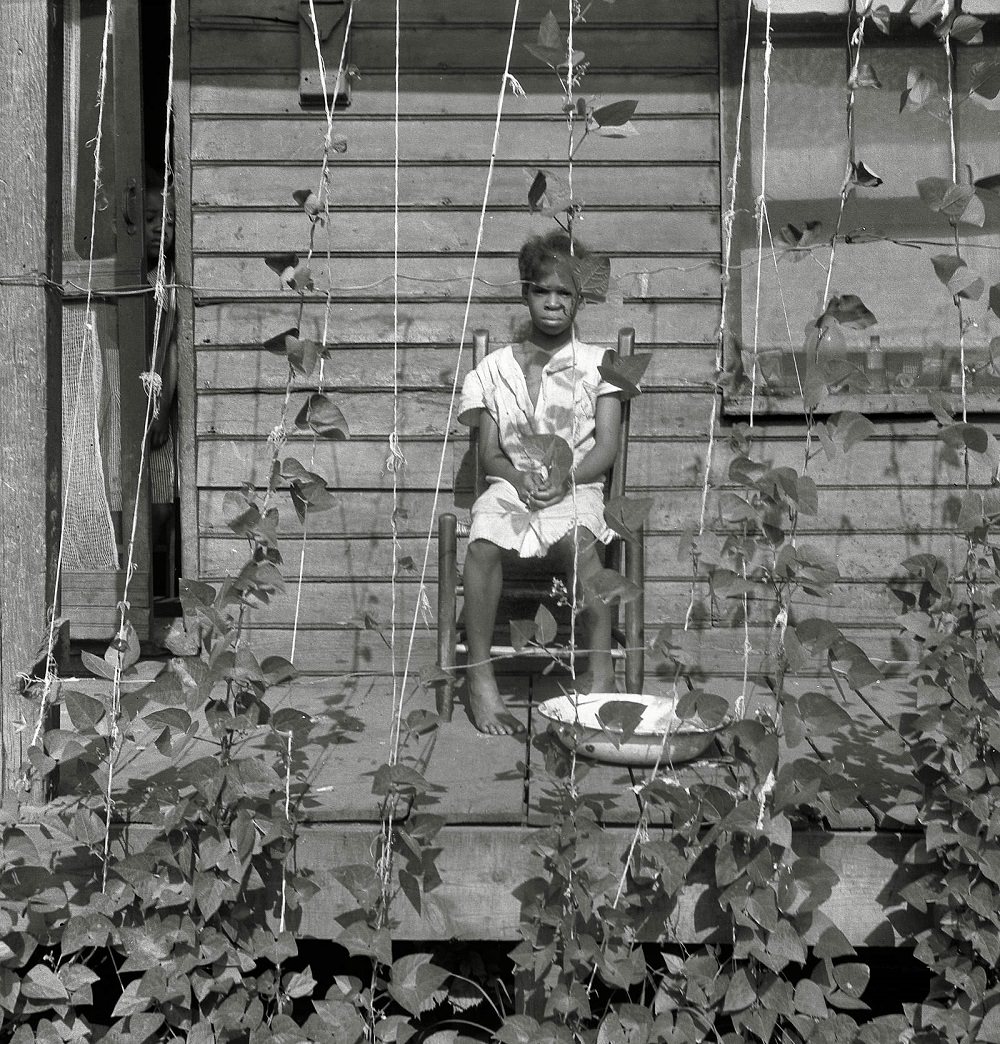
June 1938 in Memphis, Tennessee feels close at hand in this quiet porch scene, where a young child sits on a simple chair against weathered wooden siding. Vines climb on strings like a homemade trellis, softening the hard lines of the house and framing the figure at center. A shallow basin rests near bare feet, a humble detail that hints at daily routines and the resourcefulness of keeping life orderly in tight quarters.
Behind the child, a doorway opens into shadow, suggesting family presence just out of sight, while a screened window and rough boards speak to the age and upkeep of the structure. The garden growth is not merely decorative; it reads as practical—food, shade, and a touch of privacy—turning a small stoop into a lived-in outdoor room. The child’s direct gaze anchors the photograph, inviting viewers to consider childhood, dignity, and endurance in a segregated Southern city.
For readers searching Memphis history, African American life in the 1930s, or the everyday texture of Depression-era neighborhoods, the photo offers a grounded glimpse of “Places & People” beyond grand events. The title’s period term reflects the language of its time, and it underscores how the built environment and social boundaries were intertwined. Seen today, the image asks us to look carefully at ordinary spaces—porches, plants, doorways—and recognize them as part of a larger story of community and survival.