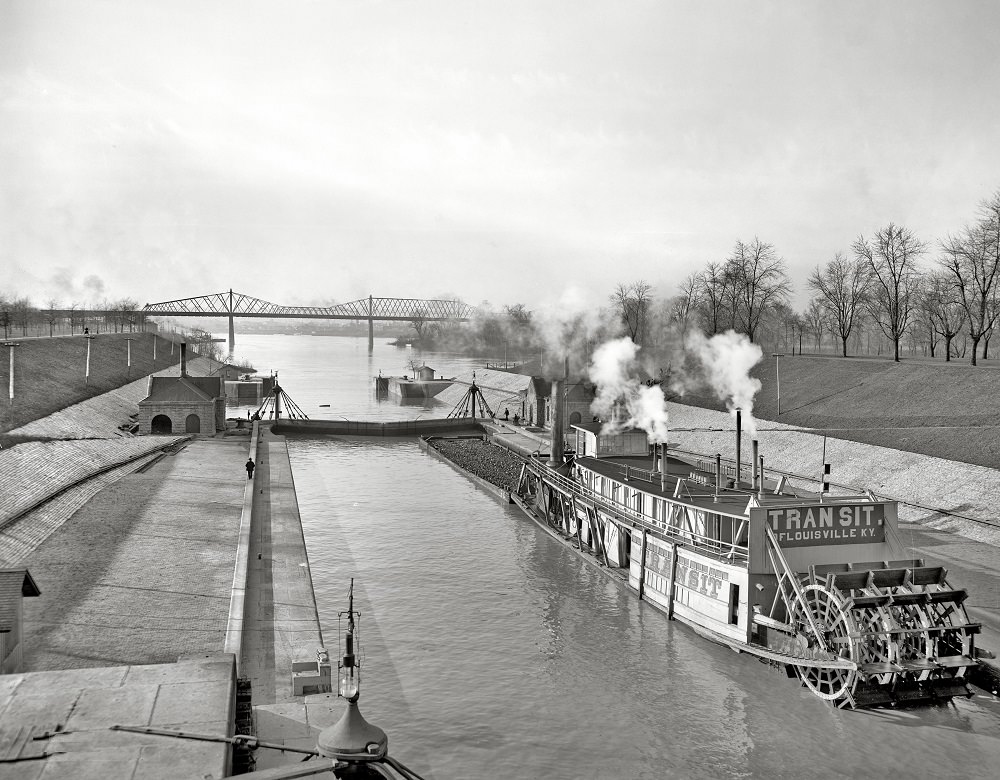
Morning haze hangs over the canal locks at Louisville in 1906, where engineered walls and calm water create a corridor for commerce. A sternwheel steamboat named “Transit,” marked “Louisville Ky.,” waits alongside the lock chamber as smoke rises in bright plumes from its stacks. In the distance, a truss bridge spans the river, situating the scene within a larger transportation web of river, rail, and roadway.
Along the lock’s edge, the geometry of gates, cables, and masonry tells the story of how boats were lifted and lowered to bypass the natural obstacles of the Ohio River. The steep embankments on either side look freshly graded, while small structures and walkways hint at the daily labor required to keep traffic moving. Even without hearing it, you can almost imagine the clank of mechanisms, shouted instructions, and the steady churn of the paddle wheel as the vessel inches forward.
For anyone interested in Louisville history, steamboats, or early twentieth-century infrastructure, this photograph offers a clear view of the canal system that helped power a river city’s economy. It’s a “places and people” moment told through details: a lone figure on the lock wall, the boat’s painted lettering, and the industrial breath of steam drifting into a bare-branched skyline. Taken together, the canal locks and the Transit embody an era when waterways were both workplace and highway, guiding goods and travelers through the heart of the region.