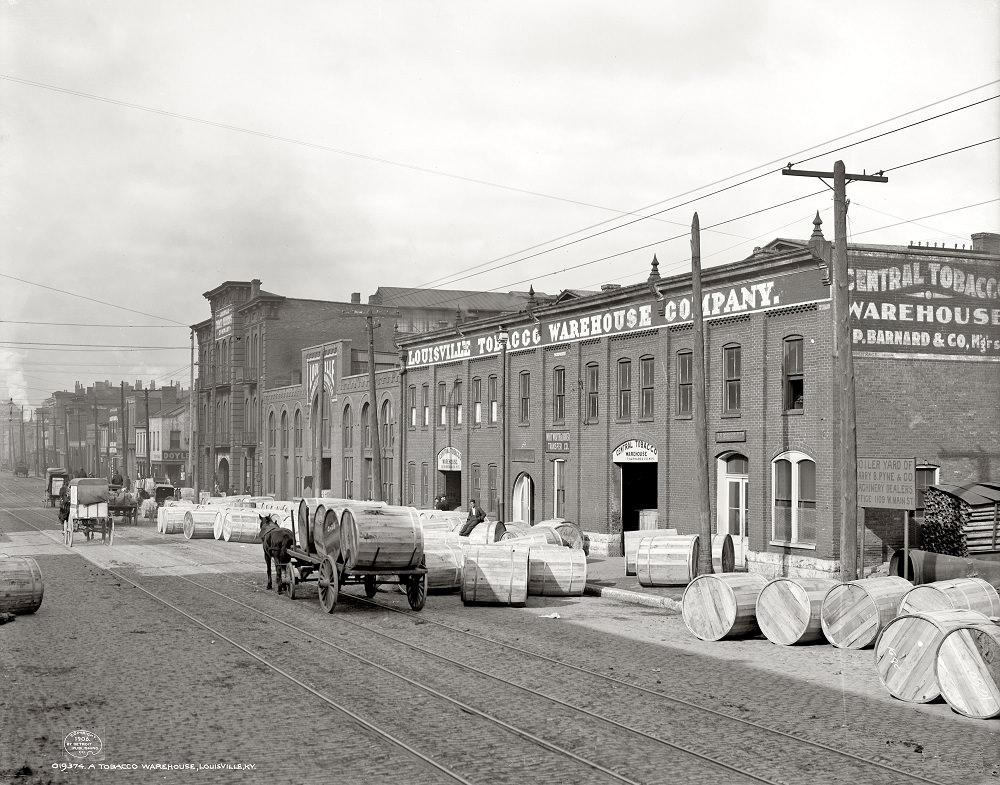
Brick facades line a long Louisville street in 1906, their painted lettering announcing tobacco warehouses and the business confidence of the era. Telegraph and utility wires stitch across the sky while streetcar tracks cut clean lines through the roadway, hinting at a city built to move goods as much as people. The architecture is sturdy and repetitive—arched doors, tall windows, and broad walls designed for storage—turning an ordinary block into a working monument to an industry that shaped Kentucky’s economy.
Along the curb, enormous wooden hogsheads sit in rows, some upright and others on their sides, waiting their turn in the flow of commerce. A horse-drawn wagon stands ready to haul the heavy barrels, and open warehouse entrances suggest constant loading and unloading just beyond the threshold. Even without the sounds, the scene feels busy: the measured pace of animal power, the clatter that cobblestones and iron wheels would have made, and the steady routine of grading, packing, and shipping tobacco.
For readers exploring Louisville history, early 20th-century industry, or the tobacco trade, this photograph offers a street-level view of how commerce looked before trucks and forklifts transformed logistics. It’s a Places & People moment rooted in everyday labor—workers, wagons, warehouses, and the infrastructure that supported them. Details like signage, tracks, and stacked barrels make it a valuable visual record for anyone researching Kentucky tobacco warehouses, urban freight corridors, or the industrial landscape of Louisville in 1906.