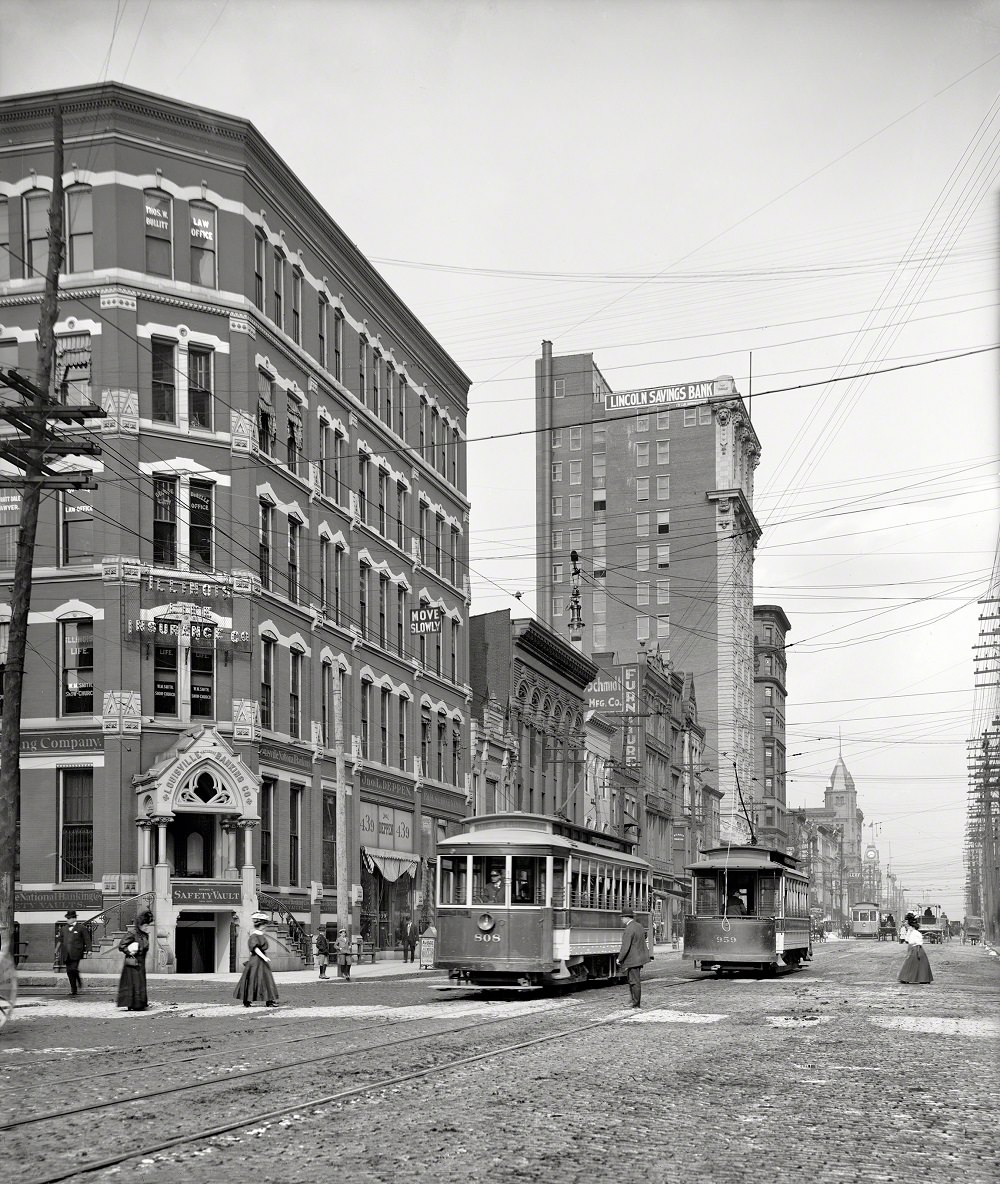
Market Street in Louisville feels busy and purposeful here, with streetcars gliding along steel rails and pedestrians negotiating the cobbled roadway under a web of overhead wires. The view looks down a corridor of multi-story commercial blocks, where painted window lettering and street-level entrances hint at offices and storefronts stacked floor by floor. A “MOVE SLOWLY” sign punctuates the scene, a small reminder that this was a working downtown where transit, foot traffic, and wagons shared the same space.
In the distance, the Lincoln Savings Bank name stands high on a prominent building, anchoring the skyline and signaling the presence of financial institutions in the city’s central business district. Closer to the camera, ornate façades and heavy masonry details show the confidence of earlier urban architecture, built to last and built to impress. The mixture of taller and shorter structures suggests a streetscape shaped over decades, with newer ambitions rising above older blocks rather than replacing them all at once.
Louisville in 1941 sits on the edge of profound change, and this Market Street streetscape captures the late streetcar era just before mid-century modernization transformed many American downtowns. The composition rewards a slow look: the track grooves, the worn paving, and the dense wiring overhead all speak to the infrastructure that made city life run on schedule. For anyone searching Louisville history, Market Street photos, or the story of the Lincoln Savings Bank, this image offers a vivid, street-level window into how people moved, worked, and gathered in the heart of the city.