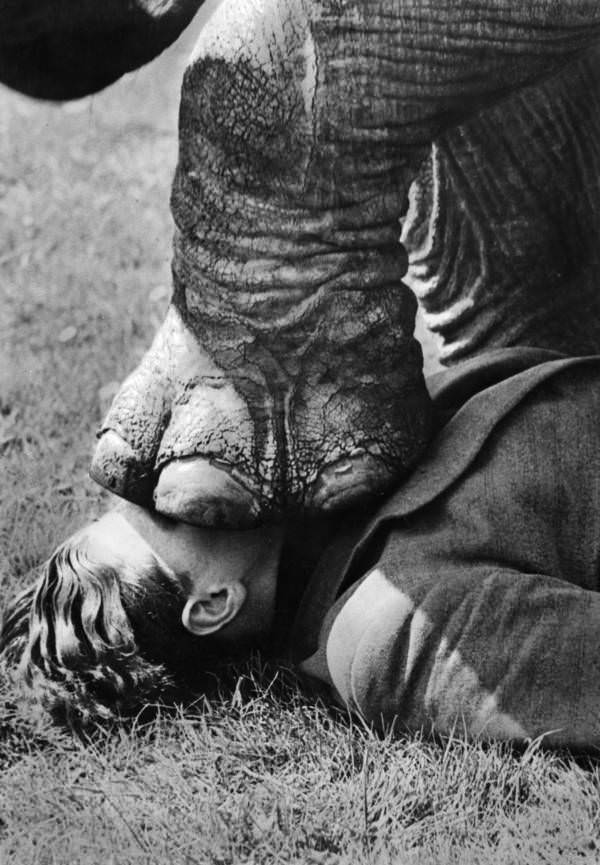
An elephant’s heavy, wrinkled foot rests squarely on a trainer’s head as he lies on the grass, turning a moment of performance into something that still feels startling decades later. The tight framing draws the eye to contrasts—thick, cracked skin against a human face and neatly combed hair—while the trainer’s calm posture suggests practiced control rather than panic. Even without a wider view of the ring, the photograph communicates the raw theater of circus and animal exhibition culture in 1938.
Staged danger was a major selling point for live entertainment in the early 20th century, and this scene reads like a publicity demonstration designed to provoke gasps and headlines. The pose implies a “trust” stunt, where the audience is meant to believe the animal’s strength is being carefully managed, yet the imbalance of power is impossible to ignore. It’s a vivid example of how trainers and promoters used close-up spectacle to create drama, suspense, and a sense of the extraordinary.
For modern viewers, the image opens a complicated conversation about historical attitudes toward animal acts, risk, and showmanship. The trainer’s vulnerability and the elephant’s immense presence make the photograph memorable, shareable, and instantly searchable for anyone exploring circus history, 1930s entertainment, or unusual vintage photos. Seen today, it’s both a document of its time and a reminder of how far public expectations around animal welfare and performance have shifted.