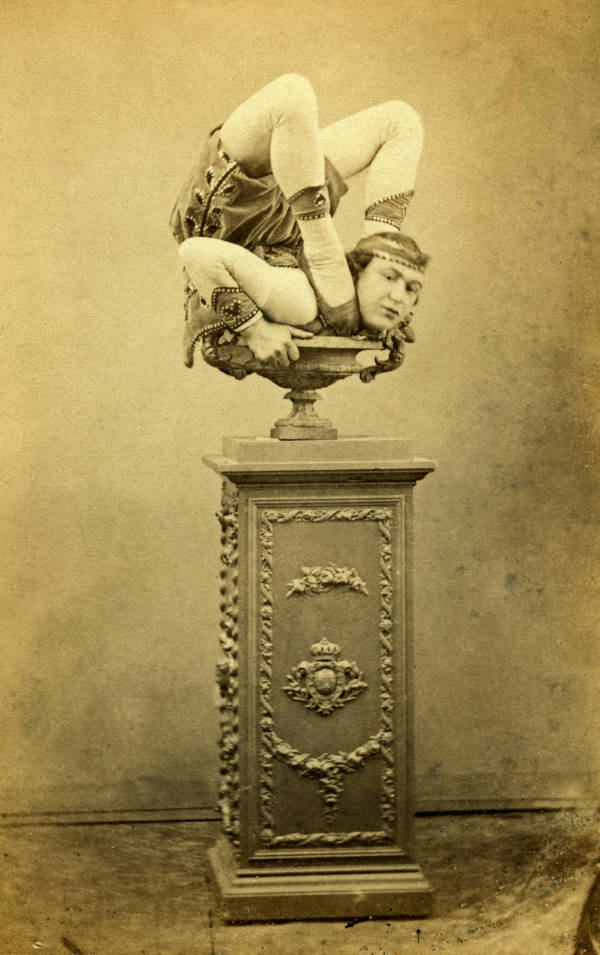
Balanced atop an ornate pedestal, a French contortionist folds into an almost impossible knot, knees tucked high and shoulders compressed, while keeping a steady, unsmiling gaze toward the camera. The performer’s patterned costume and headband read like stage attire rather than everyday dress, hinting at the theatrical world that made such feats marketable. Even in a still image, the pose communicates strain, control, and showmanship in equal measure.
Photographs from the mid-19th century often required long exposures, which makes this kind of extreme posture even more striking. The studio setting is spare, leaving the decorative column and the contortionist’s body as the central spectacle, framed against a plain backdrop that emphasizes silhouette and form. It’s a reminder that early photographic portraiture didn’t only preserve respectable sitters—it also documented entertainers who traded in astonishment and curiosity.
For modern viewers searching for “French contortionist 1865,” the appeal lies in how the image bridges circus history, Victorian-era visual culture, and the emerging popularity of photographic collectibles. The carefully staged composition suggests the performer and photographer understood exactly what would sell: an arresting illusion of the human body transformed into sculpture. Strange at first glance, the portrait rewards a longer look, revealing the craft behind the “weirdness” and the era’s hunger for marvels.