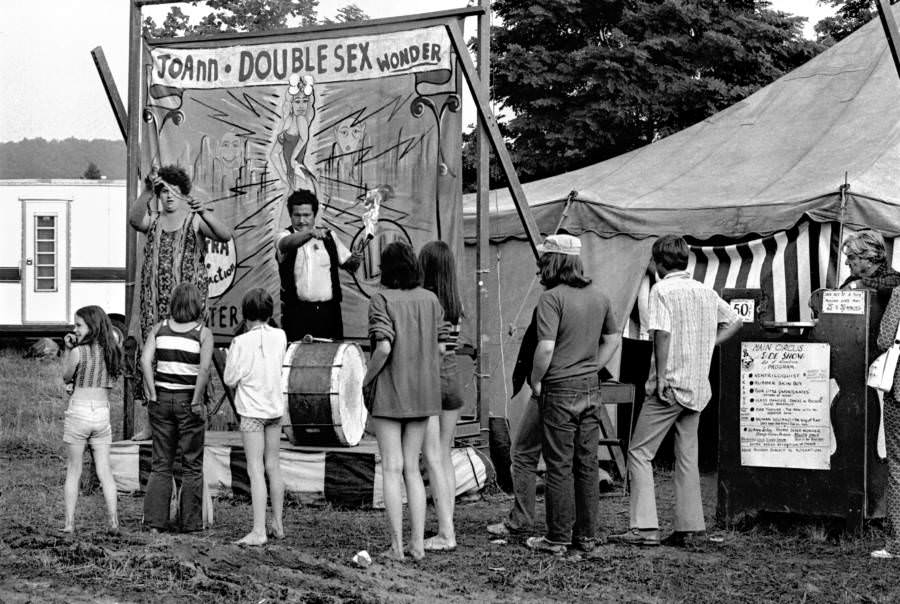
Beneath a hand-painted banner shouting “JoAnn the Doublesex Wonder,” a small platform becomes a makeshift stage as a traveling circus sideshow works a crowd in Abingdon, Virginia. A barker gestures dramatically near a bass drum while onlookers—many in casual summer clothes—cluster close to the front, trying to see and hear over the bustle of the midway. To the right, the striped opening of a tent and a price board hint at the ticketed promise inside, where curiosity is turned into admission money.
The scene is rich with the ordinary details that made such shows feel both thrilling and familiar: muddy ground underfoot, portable signage, and the temporary architecture of poles and canvas that could be packed up overnight. What draws the eye is the performance of persuasion itself—how spectacle is advertised in bold letters, framed in theatrical art, and reinforced by a human pitch meant to pull hesitant townspeople a step closer. Even without stepping inside, the photo makes clear how the sideshow traded on suspense, ambiguity, and the urge to witness something “unusual.”
Reading this 1967 moment today invites a more complicated reflection on American entertainment history and the ethics of display. Sideshows often marketed people as attractions, shaping public attitudes toward gender, bodies, and difference through sensational language like “wonder.” At the same time, the photograph preserves a fleeting slice of small-town life—teenagers and adults pausing to watch, listen, and decide—capturing how a traveling carnival could briefly rearrange the rhythms of a Virginia community before moving on.