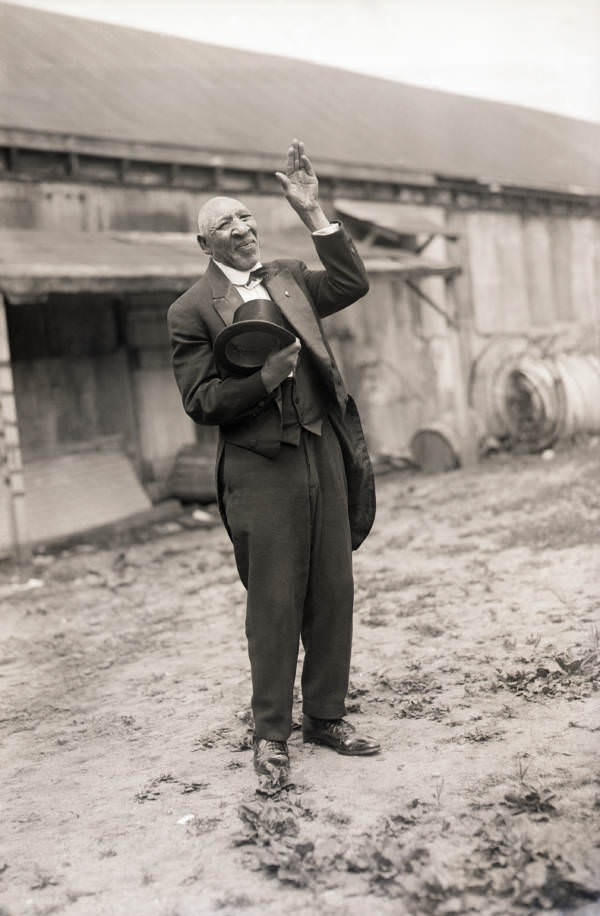
Against the sandy edge of Coney Island in 1925, Zip stands dressed far more formally than the shoreline suggests, as if a stage door has opened onto the beach. A dark suit hangs neatly, a bow tie sits crisp at the collar, and a rounded hat is held close—props of respectability set beside bare sand and weathered boards. One arm lifts in a half-wave, half-salute that reads as both greeting and performance.
The portrait’s tension lives in that contrast: seaside grit and amusement-park backdrops meeting the carefully composed posture of a working showman. The title’s charged wording—calling Zip a “freak”—points to the era’s sideshow culture and the way entertainers were marketed as curiosities for paying crowds. Yet the man in the frame projects presence and control, meeting the camera with a practiced expression that hints at agency amid a system built on spectacle.
For readers interested in Coney Island history, early 20th-century entertainment, and the visual language of vaudeville and sideshows, this image offers a stark, human-scale document. Details like the sandy ground, the rough structures behind him, and the deliberate wardrobe choices anchor the scene in a working waterfront amusement district rather than a glamorous postcard view. It’s an unsettling but valuable reminder of how American popular culture once blurred leisure, labor, and exploitation—captured in a single beachside moment.