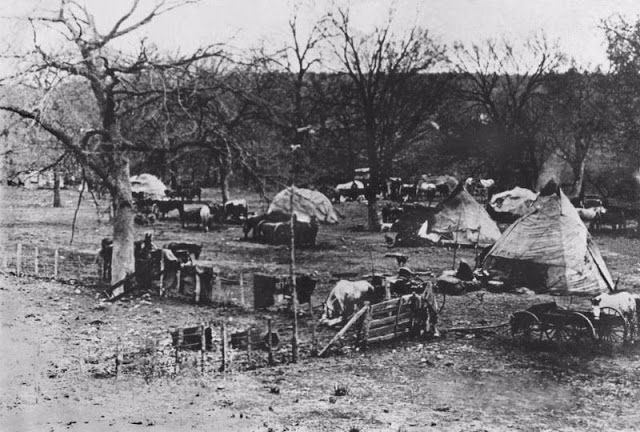
Across an open stretch of ground, a small encampment spreads beneath bare-limbed trees, with several conical tipis rising among wagons, fences, and scattered gear. Horses and livestock linger in the background, hinting at the daily work that kept families fed and moving, even when the land around them was changing fast. The scene feels both temporary and rooted—a community arranged with purpose, yet exposed to the elements and the pressures beyond the frame.
Wealth is not always visible in a single photograph, and that tension sits at the heart of the Osage story referenced in the title. The Osage Nation became widely known for extraordinary prosperity, yet policies and outside interests steadily narrowed their control over where and how they could live. In images like this, material culture and mobility—wagons, animals, shelters—suggest adaptation and resilience, even as forced relocation and reservation life reshaped older patterns of homeland and autonomy.
Looking closely, the photo offers a “Places & People” snapshot that invites readers to slow down and notice the everyday: the spacing of tipis, the utilitarian fences, the busy clutter of tools and supplies. For anyone searching for Osage Nation history, Native American reservation era photography, or the lived realities behind headlines about riches and dispossession, this post frames the larger narrative through a grounded human landscape. What remains most striking is the ordinary persistence of life—organized, communal, and enduring—amid upheaval.