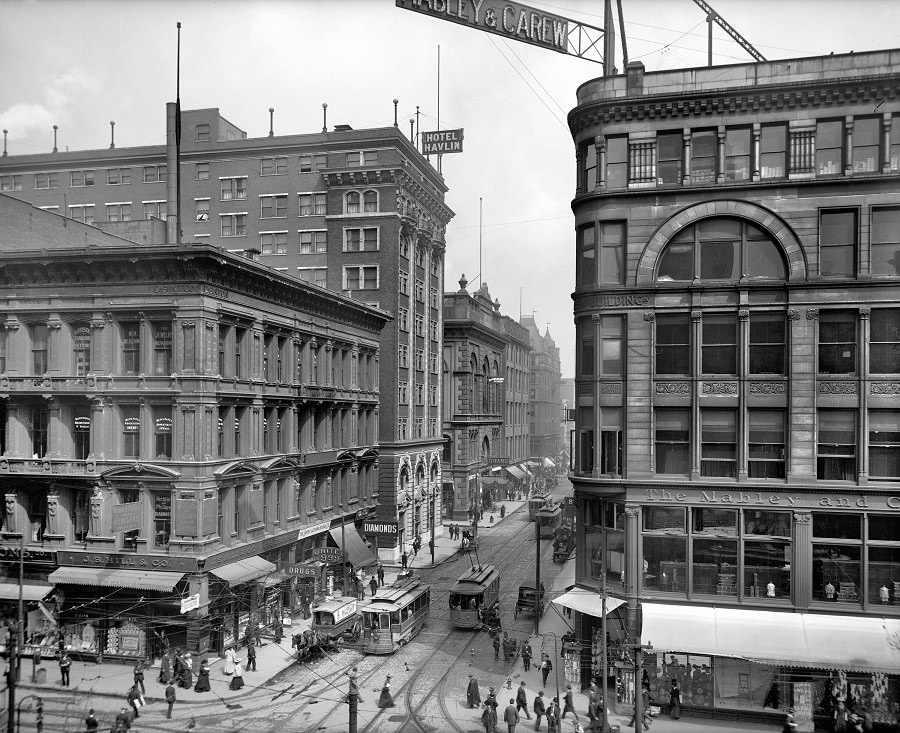
Vine Street at Fifth reads like a bustling stage in early-20th-century Cincinnati, where streetcar tracks carve clean lines through the intersection and overhead wires stitch the scene together. Several trolleys roll past one another amid a steady stream of pedestrians, suggesting the familiar rhythm of commuting, errands, and city life. Tall commercial blocks frame the view, their repetitive windows and sturdy masonry hinting at prosperity and rapid urban growth.
Storefront signs and awnings pull you down from the skyline to street level, where shop windows and corner entrances invite foot traffic. A prominent “Hotel” sign rises above the streetscape, while advertisements for everyday goods—drugs, diamonds, and other retail staples—signal a district built on commerce as much as transportation. The architecture mixes ornate cornices and rounded corner detailing, a reminder that downtown intersections were also showpieces meant to impress.
Energy radiates from the crowded sidewalks: people cluster near curb edges, cross between cars, and gather under the shadow of multi-story buildings. The streetcars dominate the center, emphasizing how public transit shaped Cincinnati’s downtown long before the age of the automobile took over the streets. For readers searching Cincinnati history, Vine Street, or streetcar-era urban life, this 1907 view offers a vivid, grounded snapshot of how places and people met at one of the city’s key crossroads.