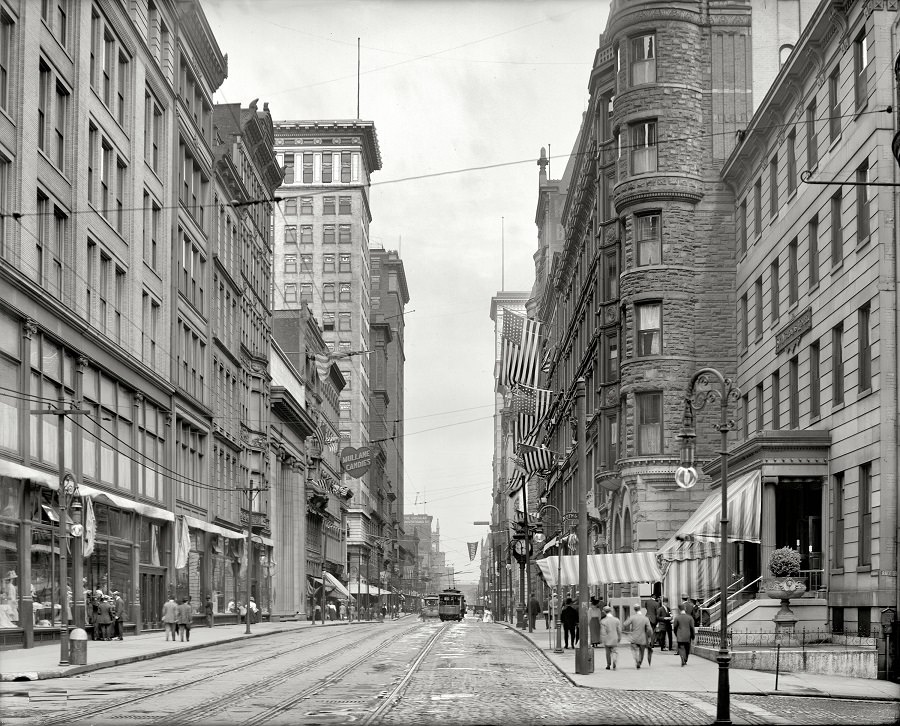
Looking east along Fourth Street from the corner at Race, downtown Cincinnati appears in full early-20th-century stride, with streetcar rails cutting twin lines through a broad corridor of stone and brick. Mid-rise commercial blocks press in on both sides, their repetitive windows and ornate cornices forming an urban canyon that draws the eye toward the hazy distance. Overhead wires crisscross the sky, a reminder that electric transit and modern street infrastructure were already shaping the city’s daily rhythm around 1910.
Storefront display windows and awnings animate the sidewalks, hinting at a busy retail district where pedestrians moved between businesses on foot. A streetcar waits farther down the tracks, while small clusters of people gather near doorways and curb edges, giving the scene a lived-in, working-day feel rather than a posed panorama. Flags hung from upper stories add a ceremonial note, suggesting civic pride woven into the everyday streetscape.
Architectural variety stands out in the details, especially the rounded corner building on the right with its vertical bay windows and heavy masonry, contrasting with the flatter façades across the street. The cobbled roadway, the tidy setbacks, and the carefully scaled streetscape together offer a rich reference point for anyone interested in Cincinnati history, Fourth Street, or the evolution of American downtowns. As a historical photo, it rewards slow viewing—tracking how transit, commerce, and architecture converged to define the look and pace of the city in the years just before the automobile fully took over.