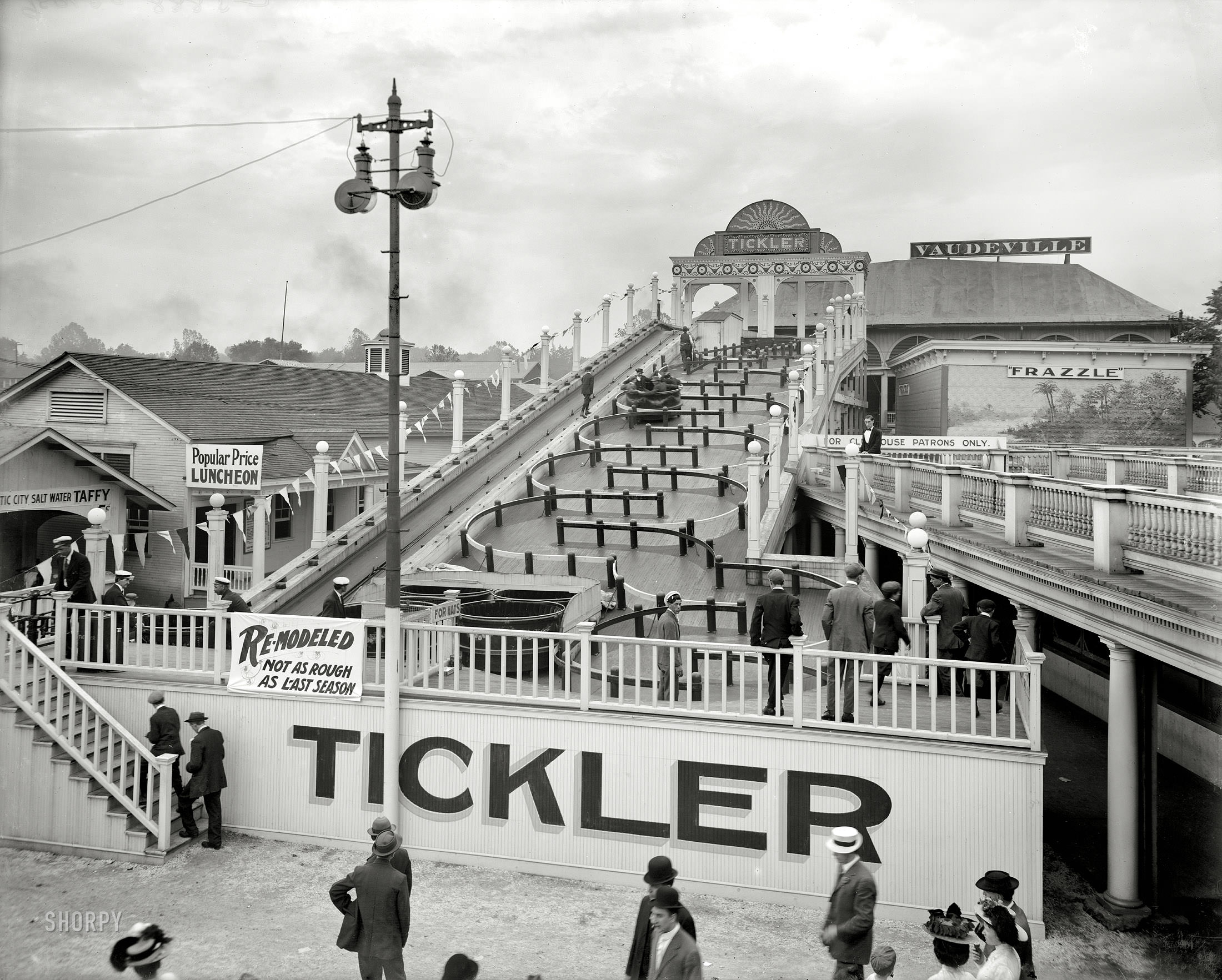
Rising above the midway at Chester Park in Cincinnati, the broad wooden structure labeled “TICKLER” dominates the scene, its switchback course promising jolts and laughter to anyone climbing aboard. Painted promises of improvement—“Remodeled”—hang near the entrance, while a tall pole with overhead wires hints at the modern utilities and electric amusements that were reshaping leisure around 1909. The airy railings, globe-topped posts, and crisp signage give the park a clean, carefully managed look meant to reassure as much as to thrill.
Along the walkways, well-dressed visitors in straw boaters and dark suits gather at the edges, watching the action and scanning the attractions. Nearby signs advertise a “Popular Price Luncheon,” and another storefront calls out salt water taffy, reminding us that amusement parks were as much about food, strolling, and social display as they were about rides. Every element—bunting, billboards, and the steady flow of pedestrians—suggests a place designed to keep people moving, spending, and lingering.
In the background, “VAUDEVILLE” lettering and a large “FRAZZLE” panel point to the variety-show entertainment that rounded out a day at the park, mixing mechanical thrills with live performance. The photograph becomes a vivid snapshot of early 20th-century Cincinnati recreation, where innovation, advertising, and architecture worked together to sell an experience. For readers interested in Chester Park history, Cincinnati amusement parks, or the culture of leisure circa 1909, this image offers a richly detailed window into a bustling day out.