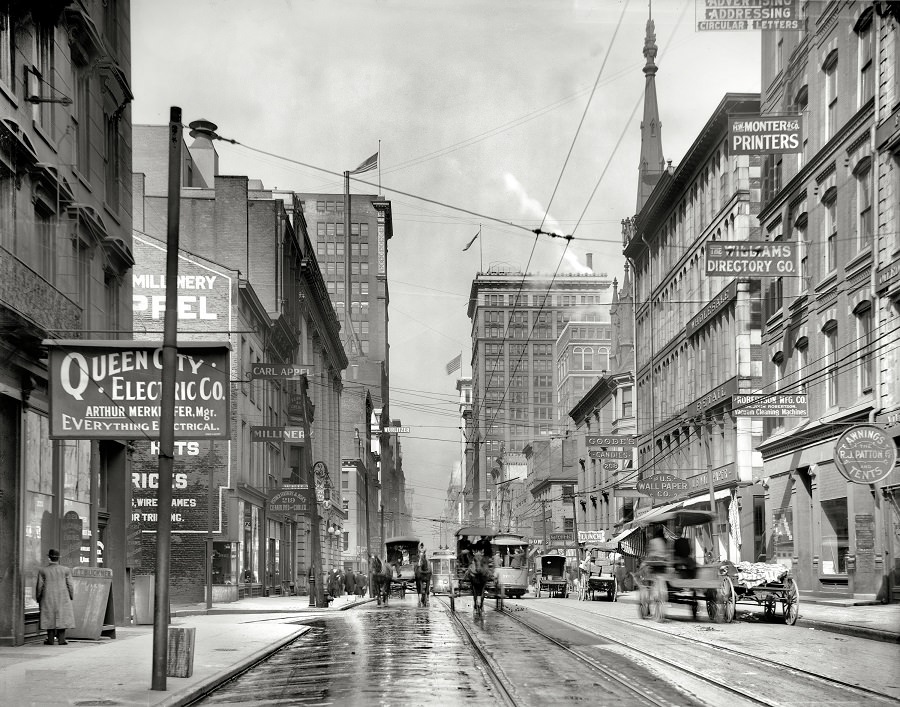
Fourth Street in Cincinnati, circa 1910, reads like a ledger of urban ambition—brick and stone storefronts stacked tight, tall commercial blocks rising in the distance, and a thicket of overhead wires crisscrossing the sky. Streetcar tracks cut two bright lines through a damp-looking roadway, guiding the eye toward the city’s busier core. Painted wall ads and projecting signs announce everyday services and goods, turning the street itself into a canyon of typography.
Along the curbs, the traffic tells its own story of transition: wagons and early automobiles share space with streetcars, while pedestrians move between shopfronts and doorways. The scene feels workmanlike rather than ceremonial, built around deliveries, errands, and the steady churn of commerce. Even without naming every business, the visible signage hints at a district where printing, directories, electrical goods, and other modern trades clustered close to transit.
For anyone interested in Cincinnati history, Fourth Street offers a vivid snapshot of how American downtowns functioned in the early twentieth century—dense, wired, and loudly advertised. Architectural details on upper floors suggest offices and rented rooms above street-level retail, a classic pattern of mixed-use city life. As a historical photo, it rewards slow viewing: follow the rails, read the signs, and imagine the noise and motion that once echoed between these buildings.