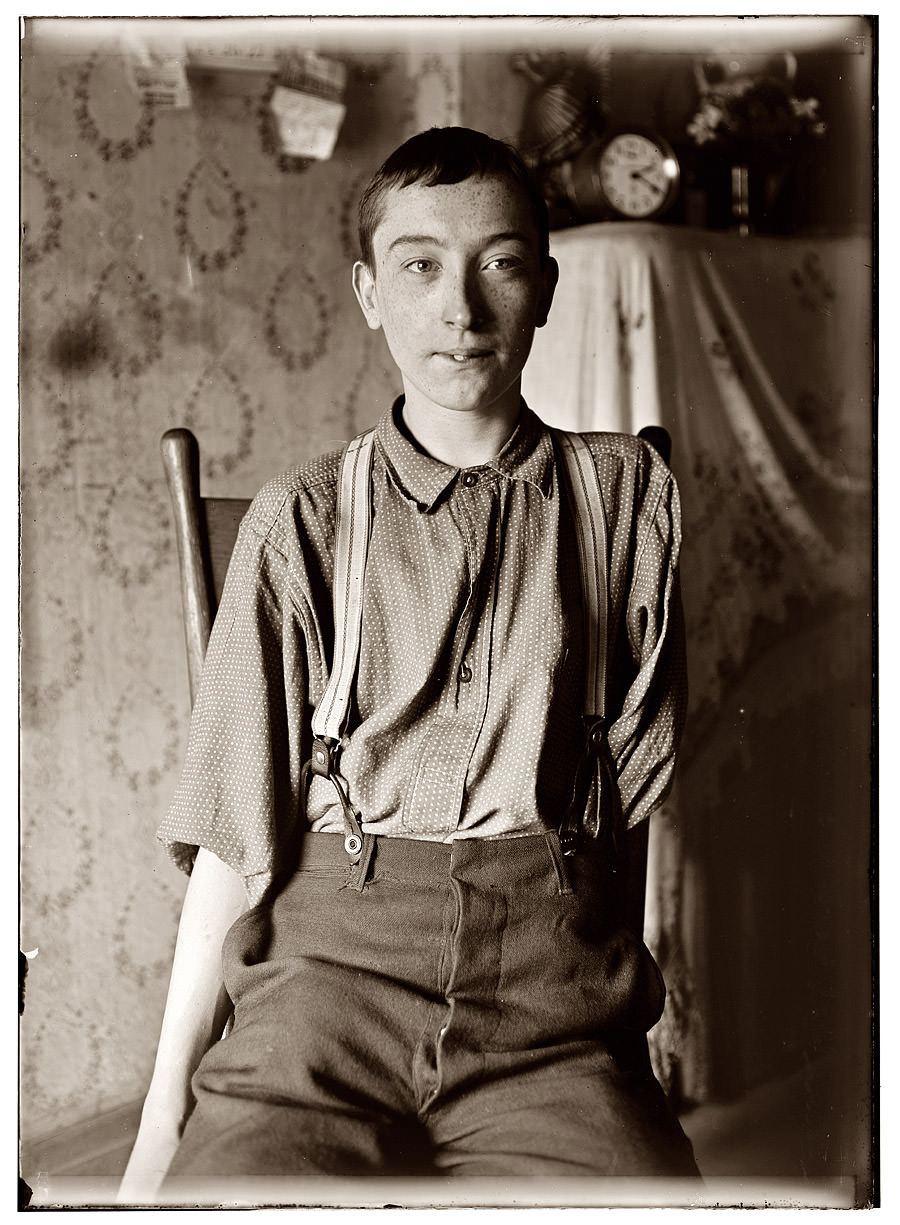
Harry McShane sits for a straightforward portrait at 134 Broadway in Cincinnati, dated 1908, meeting the camera with an expression that feels both guarded and familiar. The simple wooden chair, the neat shirt with suspenders, and the soft studio-like lighting give the scene an intimate, working-life realism rather than a grand, formal pose. Even without a caption beyond his name and address, the photograph invites a closer look at the everyday texture of early twentieth-century city life.
Behind him, patterned wallpaper sets a domestic backdrop, while a draped surface holds a small clock and other indistinct household items, quietly anchoring the sitter in a lived-in interior. The composition keeps the focus on McShane’s face and posture, yet it also preserves telling details—fabric, furniture, and the controlled stillness required for a portrait in this era. As a piece of Cincinnati history, it reads like a window into routines, modest comforts, and the visual language of home and work in 1908.
For readers exploring Places & People, this post connects a specific address—134 Broadway—to a real individual, reminding us how neighborhoods are built from countless such moments. The image works beautifully for anyone researching Cincinnati genealogy, local history, or early 1900s portrait photography, offering clues in clothing and setting that records alone can’t supply. Viewed today, McShane’s steady gaze turns an old photograph into an encounter across time, rooted in one city and one recorded year.