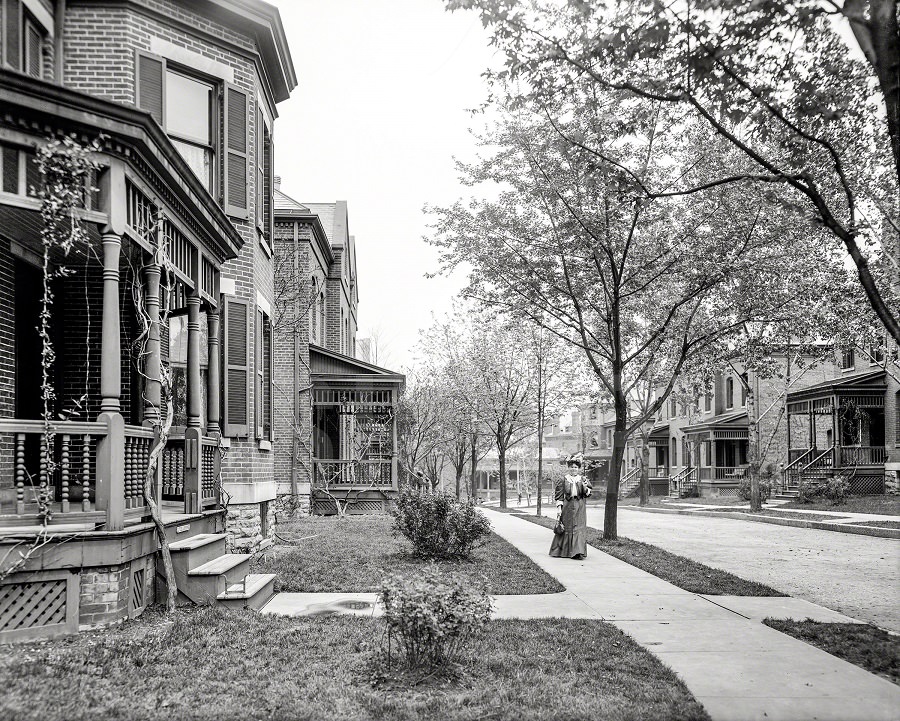
Brick townhouses and generous porches line a quiet street in Fort Thomas, Cincinnati circa 1907, where shade trees arch over a broad sidewalk and neatly kept yards. The closest home reveals period details—tall shuttered windows, carved posts, and a stone foundation—hinting at the care invested in turn-of-the-century residential architecture. Even the creeping vines and trimmed shrubs contribute to the sense of a neighborhood designed for comfort, conversation, and a slower pace.
Along the walkway, a lone figure in long dress pauses mid-stroll, a small human moment set against the ordered geometry of steps, railings, and picket-like porch balusters. The street itself reads as lightly traveled, more a shared public room than a channel for constant traffic, with houses set back just enough to create a rhythm of façades and front gardens. In the distance, more homes and porches recede under the canopy, drawing the eye down the block and suggesting a stable, lived-in community.
For anyone searching local history, this scene offers a textured glimpse into early 1900s life near Cincinnati—how people moved through their neighborhood, what their homes looked like, and how greenery softened the built environment. The photograph rewards close looking: the interplay of brickwork and wood trim, the practical sidewalk edging, and the way mature trees frame everyday routines. As a historical photo of Fort Thomas, it captures the enduring appeal of streetcar-era domestic design and the understated charm of “places & people” at the start of the twentieth century.