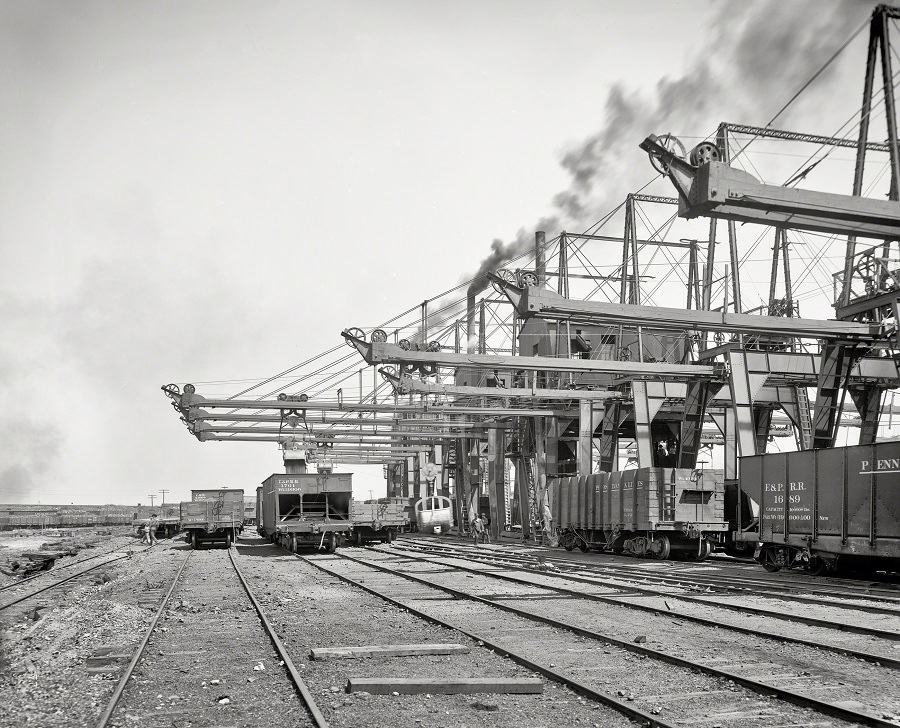
Along Cleveland's lakefront the Cleveland & Pittsburgh ore docks rise in a forest of gantry cranes and loading booms, their skeletal steel frames receding into the hazy sky circa 1906. Dark plumes of steam or smoke curl from stacks as men and machines move in concert, and the photo's wide view emphasizes the scale of the operation—an industrial skyline defined by pulley wheels, cables, and long cantilevered conveyors. Rail tracks fan out toward the docks, where open‑hopped ore cars sit ready on parallel lines, awaiting the deliberate clatter of tipping and conveyor belts. Close inspection reveals workers maneuvering in the shadow of towering equipment, while freight cars stamped with railroad markings form a rhythmic pattern that leads the eye across the scene to the distant loading points. At a glance the image captures more than machinery; it records a pivotal moment in the region's industrial story, when iron ore shipments and rail logistics were central to Cleveland's economy. The interplay of heavy industry, transportation infrastructure, and human labor here makes it a compelling document for historians and enthusiasts of industrial heritage alike.