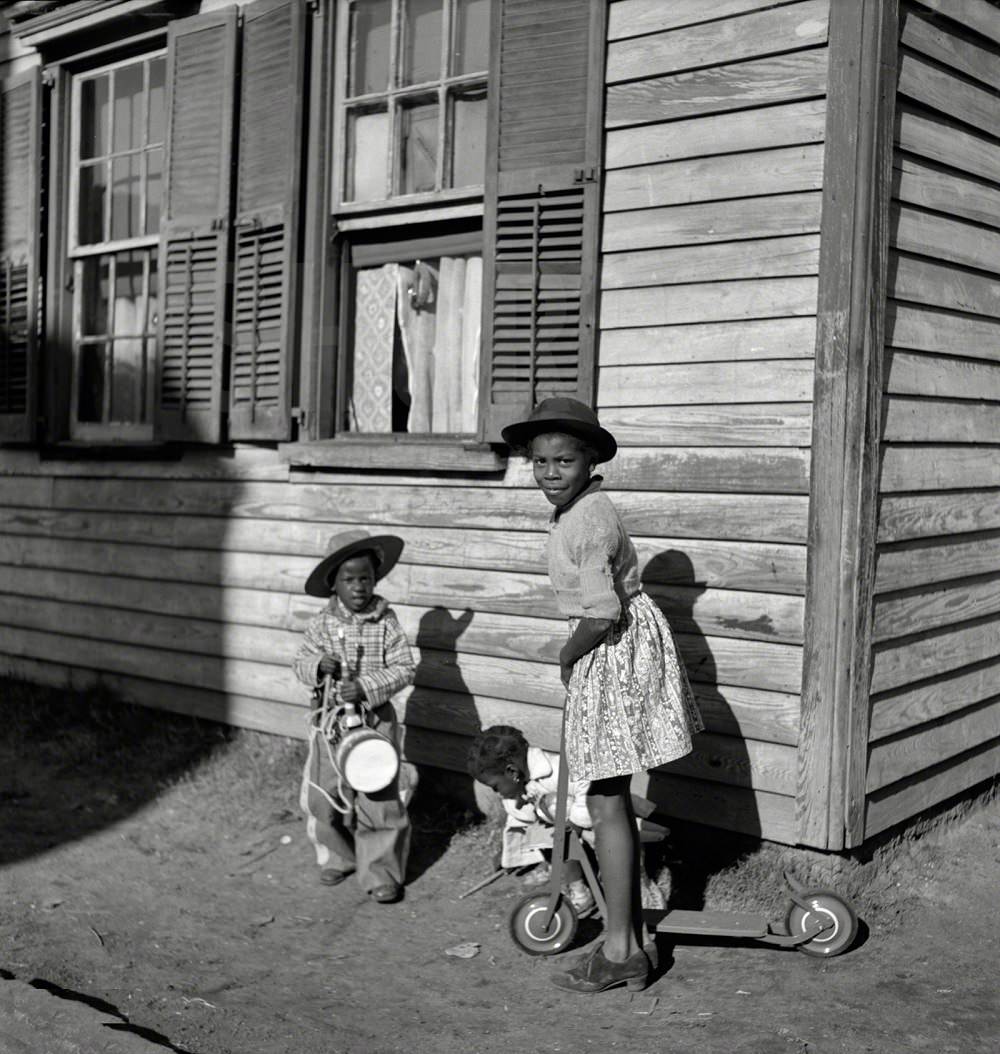
Afternoon light rakes across the clapboard siding of a modest home near Charleston, picking out the grain of weathered wood and the neat geometry of shuttered windows. Curtains hang inside the panes, softening the hard lines of the exterior and hinting at the domestic world just beyond the glass. The title places the moment in December 1938, when such houses—practical, elevated, and tightly built—were familiar features of the Lowcountry landscape.
In the yard, three children occupy the narrow strip between wall and road, turning an ordinary edge of the property into a stage for play. One stands with a scooter, another grips a toy drum, and a younger child crouches close to the ground, all bundled in everyday clothes and hats that read as both practical and proud. Their postures and expressions convey a mix of curiosity and composure, as if interrupted mid-game by the photographer’s presence.
Viewed today, “Negro home near Charleston” functions as more than a label; it anchors the photograph in the racialized realities of the late 1930s American South while preserving a scene of family life that official records often ignored. Details like the house’s construction, the open shutters, and the children’s toys offer valuable clues for readers interested in Charleston-area social history, vernacular architecture, and the textures of childhood during the Great Depression era. The image lingers not for spectacle, but for its quiet clarity—home, place, and people held in a single frame.