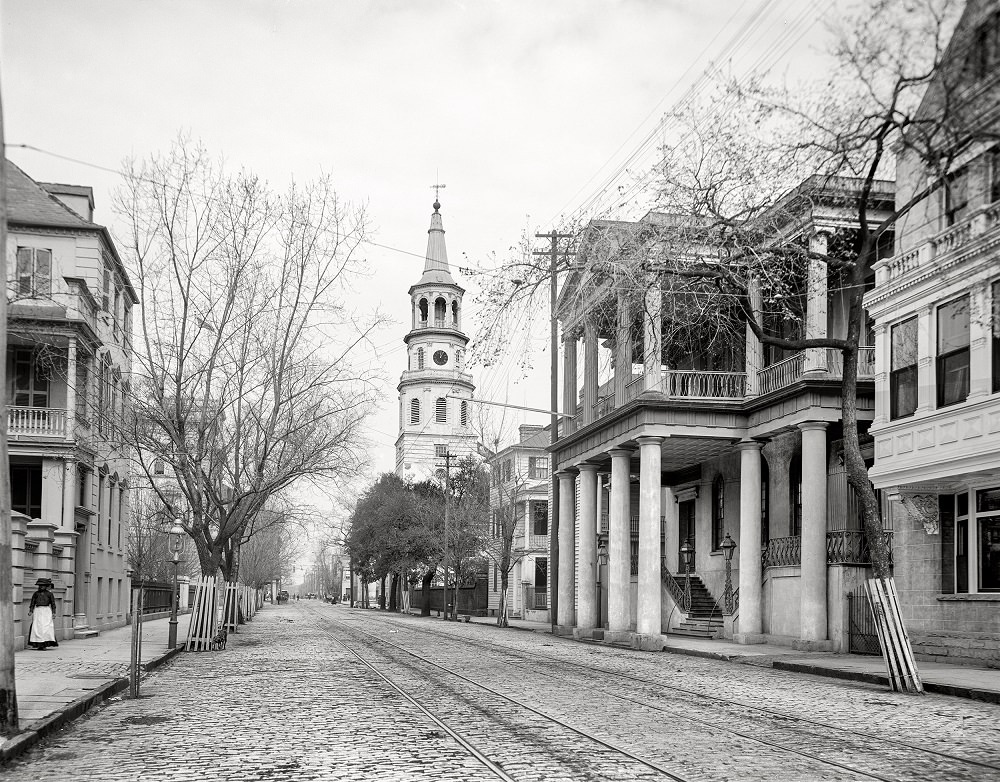
Meeting Street stretches away in long perspective, its cobblestone surface cut by streetcar tracks that hint at Charleston’s early-20th-century rhythm. Bare winter trees line the sidewalks, their branches framing a corridor of elegant façades—balconies, tall windows, and the layered textures of a city built to endure coastal heat and hurricanes alike. Overhead, utility lines crisscross the open sky, a quiet reminder that modern infrastructure was settling in alongside older streetscapes.
Rising above the middle distance, the steeple of St. Michael’s Church anchors the view like a landmark for both travelers and locals. The tower’s crisp tiers and clock face stand out against the softer silhouettes of houses and trees, reinforcing why this church remains one of Charleston’s most recognizable historic sites. Architecture takes center stage here, from the church’s vertical emphasis to the stately porticoed buildings that edge the street.
Along the left sidewalk, a lone pedestrian adds scale and human presence to an otherwise calm scene, suggesting a moment between the busier pulses of commerce and churchgoing. The image invites a slow reading of details—fences set around young trees, the rise and fall of stoops, and the way the street’s gentle curve leads the eye toward the steeple. For anyone searching for “Charleston 1910,” “Meeting Street,” or “St. Michael’s Church,” this photograph offers a vivid glimpse of places and people in a city balancing tradition with change.