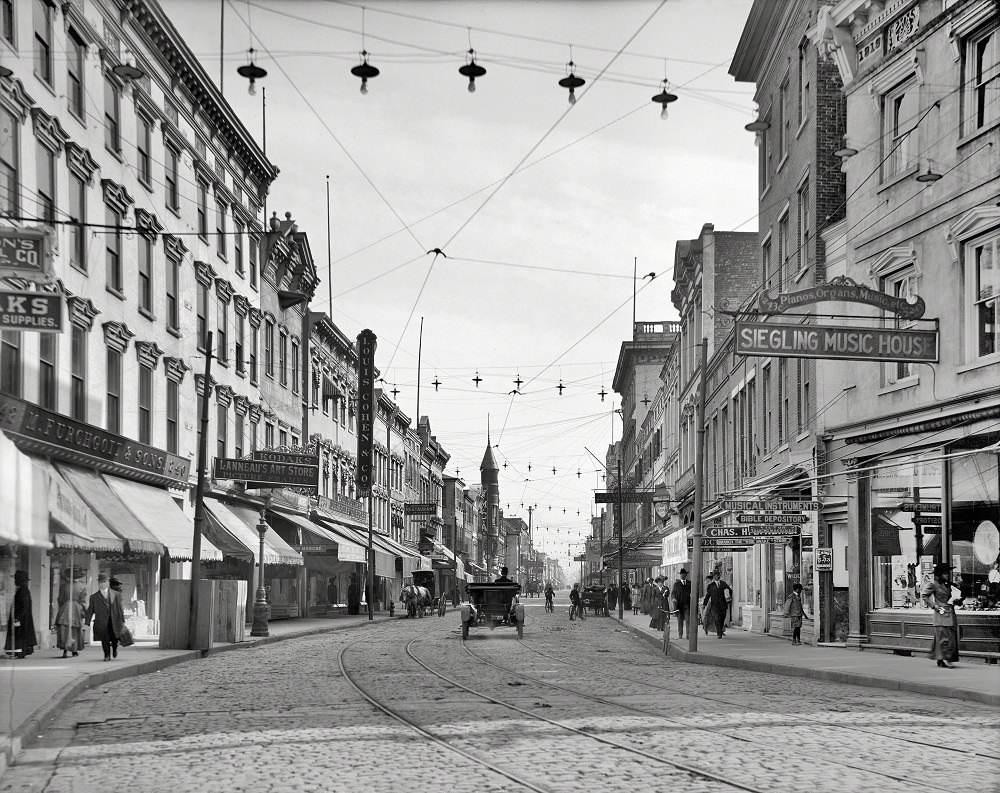
King Street in Charleston, circa 1910, stretches into the distance as a busy commercial corridor, framed by tall brick storefronts and a long run of awnings shading display windows. Streetcar tracks curve along the cobblestones, while a web of overhead wires and hanging streetlights crisscrosses the sky, hinting at the electrified modernity reshaping Southern cities in the early twentieth century.
Shop signs give the scene much of its character: “Sieglings Music House” dominates the right side, advertising pianos, organs, and music, while nearby placards point to “Musical Instruments” and a “Bible Depository.” Across the street, additional painted signs and projecting boards layer the facades, turning the block into a readable map of everyday needs—retail, supplies, and services—stacked floor by floor above the sidewalks.
Between the rails and the storefronts, people move at a measured pace beside early automobiles and a mix of street traffic, creating a snapshot of Charleston’s downtown street life at the hinge between old and new. For readers searching historic Charleston photos, King Street history, or early 1900s city scenes, this view offers rich details in architecture, signage, and streetscape design—an inviting look at how “places & people” met on one of the city’s main arteries.