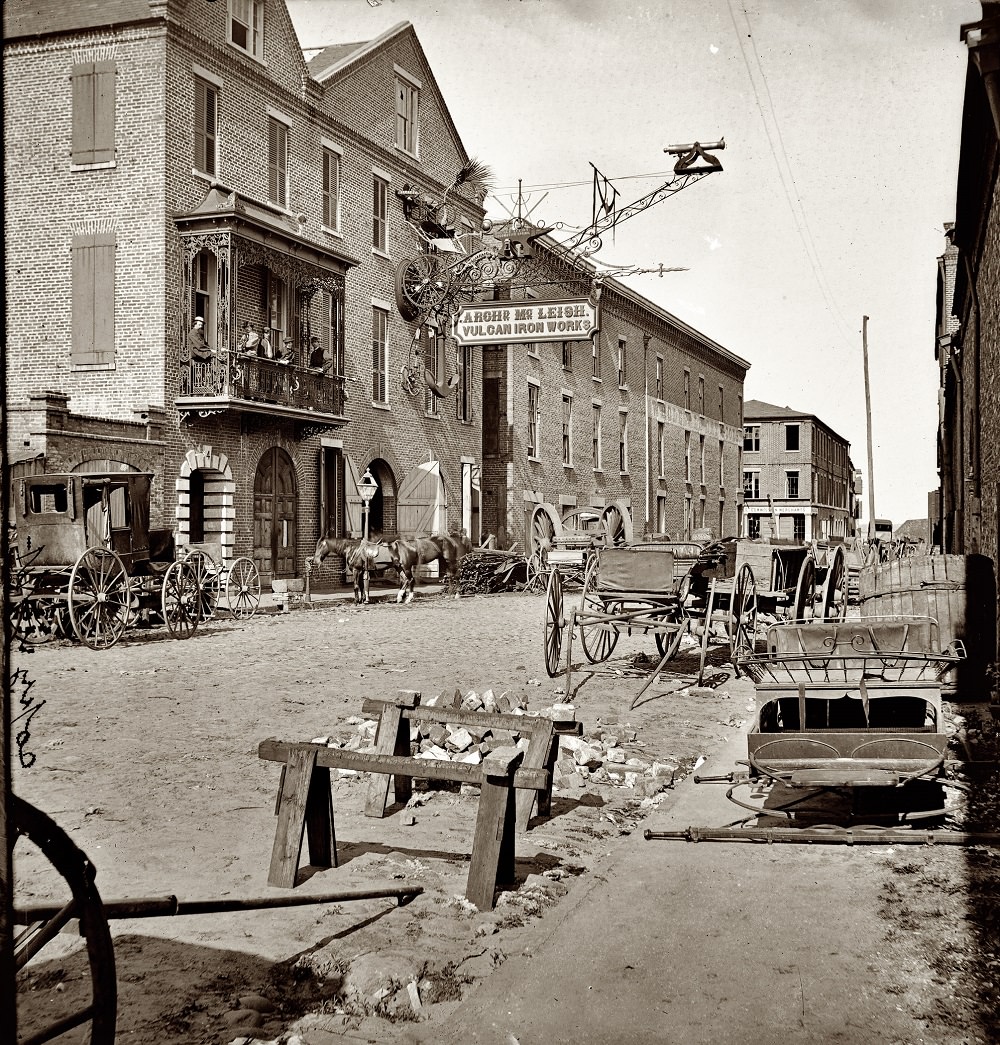
Cumberland Street stretches into the distance in this 1865 view of Charleston, its broad, uneven roadway crowded with wagons, carts, and scattered building debris. Brick warehouses and shopfronts form a solid corridor of industry, while a few figures linger on a second-story balcony, watching the street life below. Horses stand harnessed and waiting, reminding us how much of the city’s daily motion depended on animal power and skilled hands.
Dominating the scene is the bold hanging sign for Archibald McLeish’s Vulcan Iron Works, framed by ornate ironwork and a striking display of gears and tools projecting out over the street. The lettering and craftsmanship turn advertising into architecture, signaling a business that dealt in practical metalwork while also showcasing pride in the trade. Even at a glance, the façade reads as a working district—functional, commercial, and built to serve the constant demands of repair, fabrication, and transport.
After the upheaval implied by the year in the title, the photograph feels like a snapshot of Charleston rebuilding itself through labor and commerce. Details like shuttered windows, cobbled or packed-earth surfaces, and the line of vehicles along the curb offer rich texture for anyone researching nineteenth-century urban life in South Carolina. For readers interested in Charleston history, industrial heritage, or the everyday look of postwar streets, this image of Vulcan Iron Works anchors “Places & People” in tangible, street-level reality.