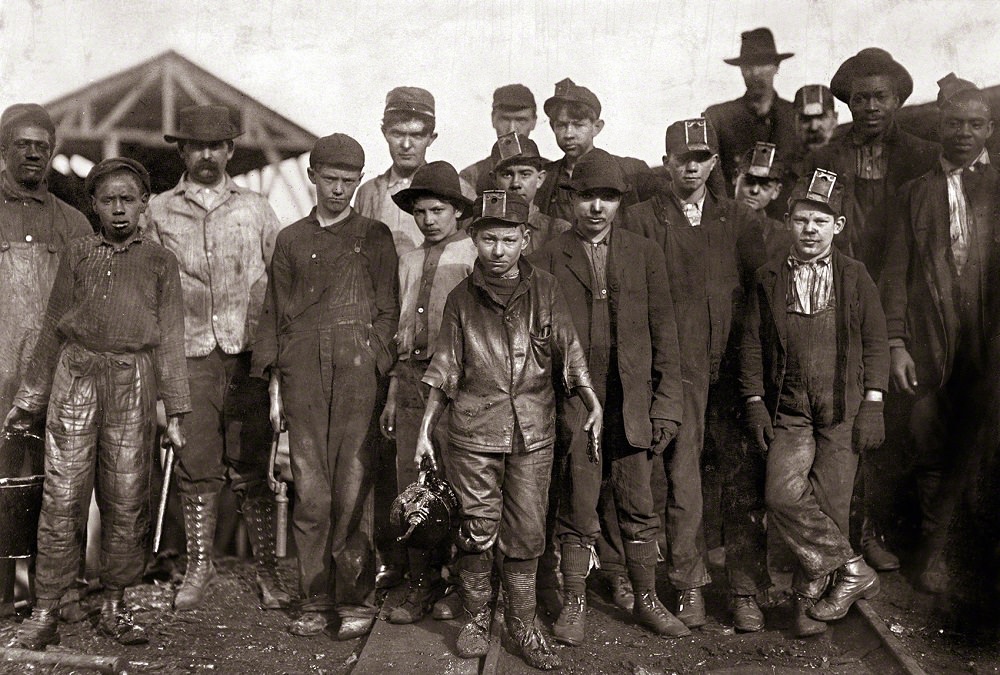
Under the looming structure of the tipple at Bessie Mine near Birmingham, a tight cluster of workers faces the camera with a mix of fatigue and composure. Their clothes are heavy with grime, boots sunk into a muddy worksite, and the small cap lamps on their hats point to the dim, hazardous world tied to coal production. The title’s mention of an oiler hints at a job spent tending the mine’s moving parts—keeping belts, gears, and machinery fed with lubricant so the surface operation could keep hauling and sorting coal without grinding to a halt.
Faces and postures do much of the storytelling here: some men stand rigidly, others lean with practiced ease, and a few appear strikingly young, underscoring how industrial labor drew in whole communities. The group’s varied workwear—overalls, jackets, and worn caps—suggests different roles and ranks around the mine, from heavy manual tasks to support jobs that kept equipment functioning. Even without motion, the scene feels loud: metal clanking, engines vibrating, coal dust drifting, and the constant pressure of production in early twentieth-century Alabama.
Bessie Mine’s setting in Jefferson County connects this moment to the broader rise of Birmingham as a center of iron and steelmaking, where coal was a critical fuel and mining shaped daily life. Photographs like this one are valuable not only as documentation of mine labor, but also as a record of industrial safety realities, working conditions, and the human cost behind regional growth. For readers searching for Birmingham mining history, Jefferson County coal operations, or tipple and mine machinery work, this 1910 image offers a direct, grounded glimpse into the workforce that kept an industrial economy running.