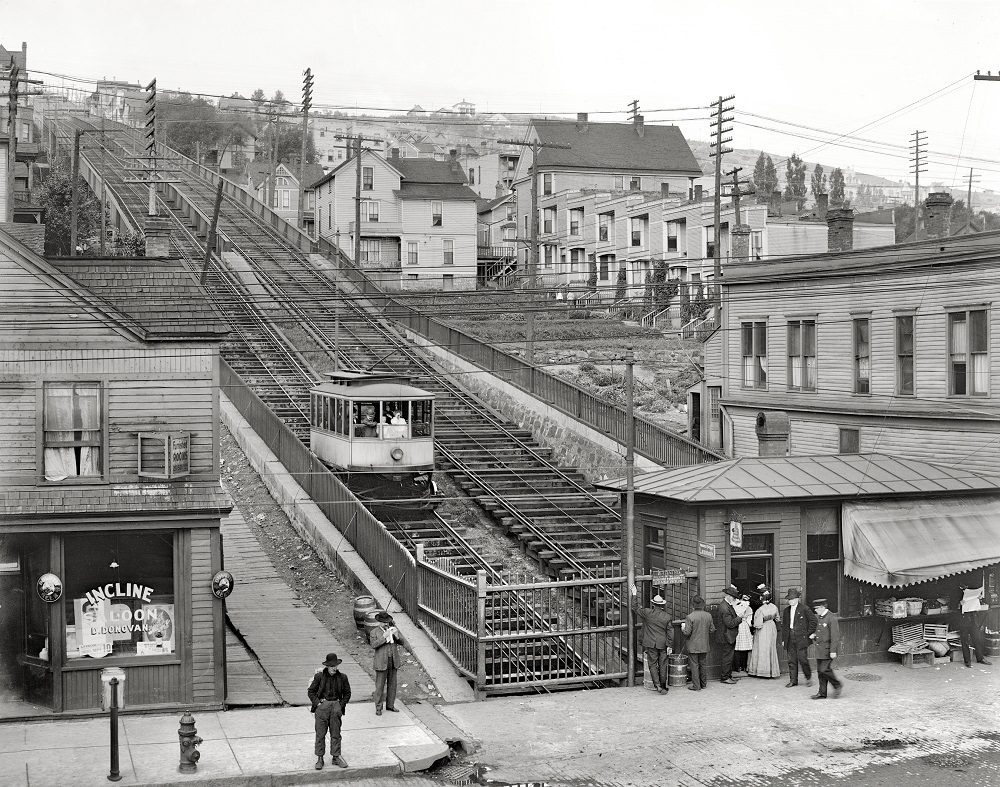
Rising sharply from Superior Street, the Duluth incline railway turns an ordinary city block into a dramatic corridor of rails, retaining walls, and stair-like grades. The car sits low in the frame as it begins its climb, framed by closely packed wooden buildings and the tight geometry of fences and platforms. Overhead, utility poles and wires crisscross the sky, hinting at a growing early-20th-century city wired for light, transit, and communication.
Along the street, small groups gather at the base—some waiting, some simply watching the machinery and routine of the line. Through the car’s windows, riders are visible, their faces set against the movement of the cable and the steep rise ahead. Details like awnings, storefront windows, and the worn street surface add texture to this 1907 view, grounding the scene in everyday commerce as much as in engineering.
Beyond the tracks, homes step up the hillside in layers, suggesting how Duluth’s terrain shaped both neighborhood life and transportation choices. Incline railways like this one were practical answers to steep grades, connecting waterfront streets to higher ground while offering a memorable ride. For anyone interested in Duluth history, Minnesota transit, or historic urban photography, the image preserves a moment when the city’s street-level bustle met the ambitious climb of modern infrastructure.