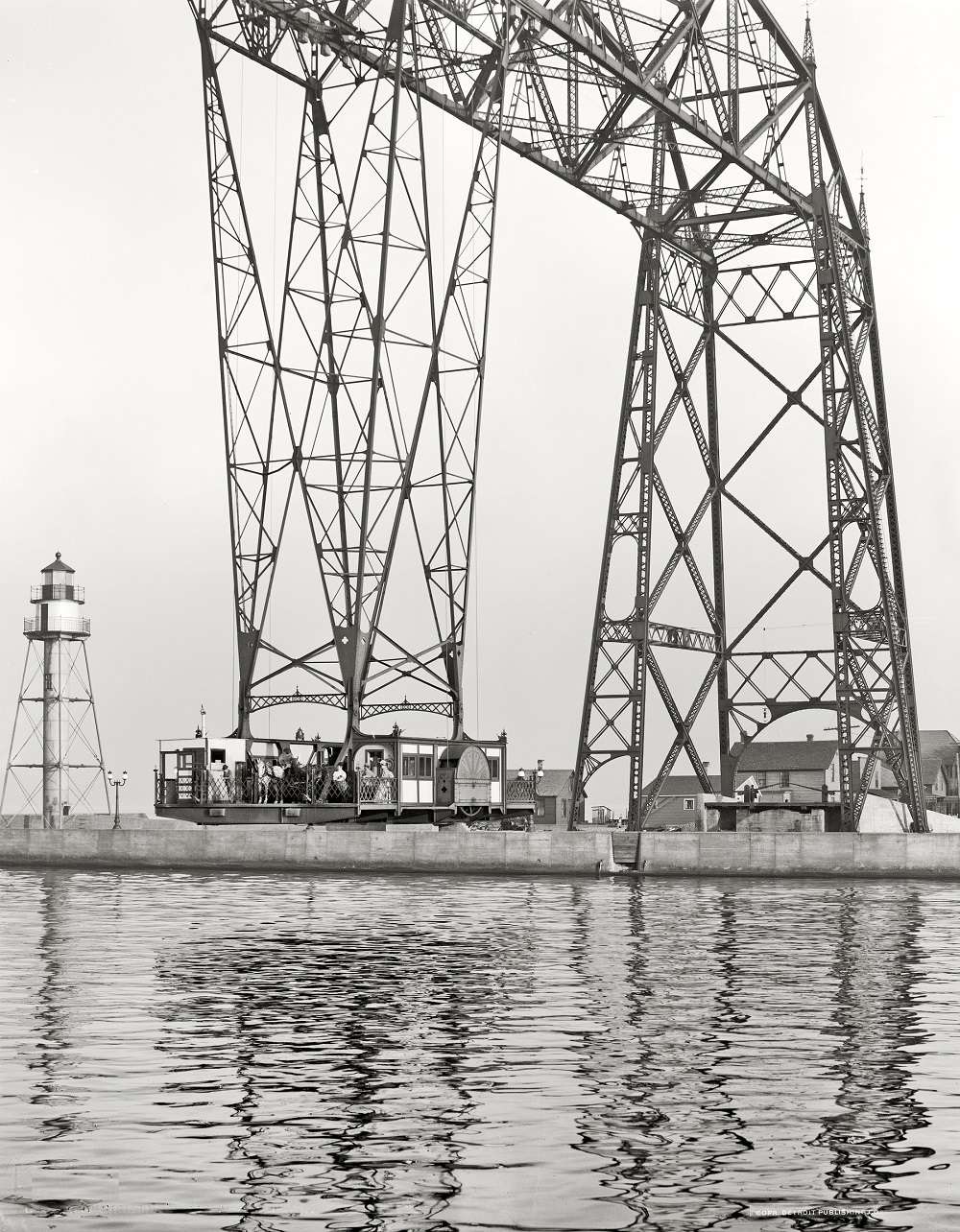
Steel latticework rises like a cathedral frame above the Duluth Ship Canal, dwarfing everything at water level and turning the skyline into a geometry of rivets and trusses. At the base, the aerial bridge car sits poised at the canal’s edge, its open sides crowded with riders who appear to be treating the crossing as both commute and spectacle. The calm surface below catches the structure’s reflections, a reminder that this engineering feat was built to live in constant conversation with the lake.
Along the breakwater, a small lighthouse stands watch to the left, while low buildings and rooftops cluster on the far side of the canal. The bridge car’s compact cabin and railing details hint at early 20th-century transit design—practical, sturdy, and made for heavy use—yet the presence of onlookers gives the scene an unmistakably human pulse. Even without hearing the machinery, you can almost sense the creak of cables and the hush that falls when the car begins to move.
Duluth’s Aerial Lift Bridge is often celebrated today, but this 1908 view emphasizes an earlier chapter: a working waterfront where shipping demanded solutions and the city answered with ingenuity. For readers interested in Great Lakes maritime history, Minnesota transportation, or the industrial architecture of the Progressive Era, the Duluth Ship Canal becomes more than a landmark—it becomes a stage where commerce, technology, and everyday life intersect. The photograph invites a closer look at how places and people were literally carried across the water in an age of rapid change.