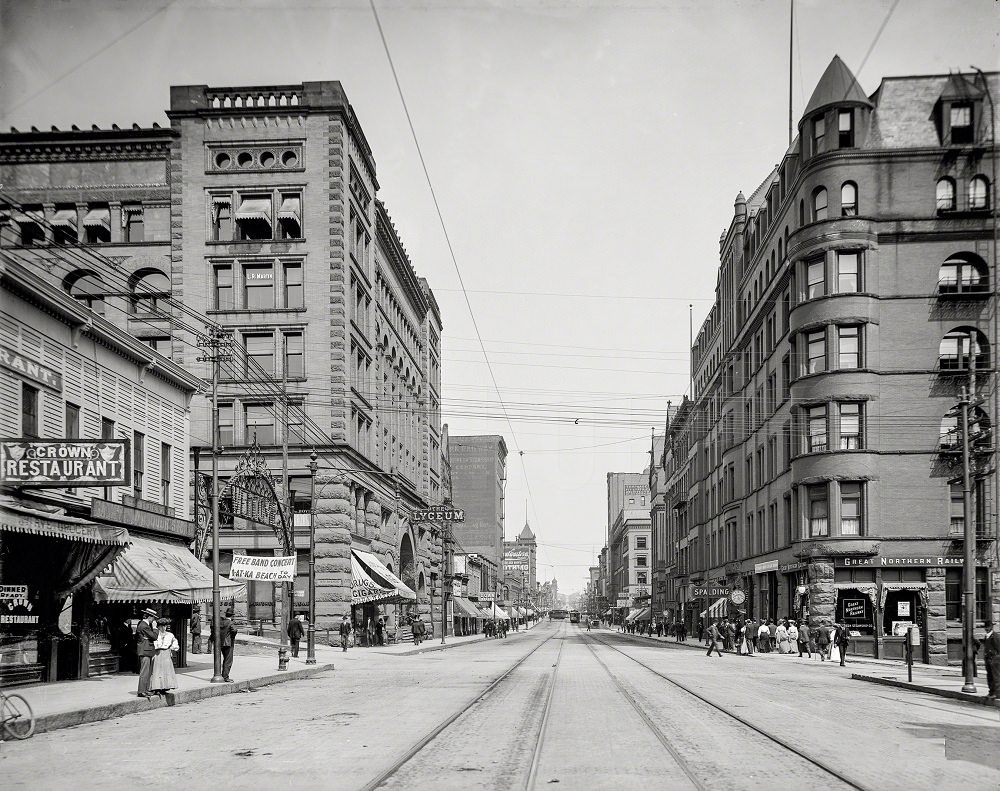
Superior Street stretches away in a long, confident line, its streetcar tracks guiding the eye toward a busy downtown horizon in Duluth. Overhead, a web of utility and trolley wires hints at the modern systems that were transforming city life in 1904. Tall commercial blocks and hotel-like façades rise on both sides, their brickwork, arched windows, and corner turrets reflecting the architectural ambition of a growing Lake Superior port.
Along the sidewalks, small groups gather near storefronts and awnings, suggesting the steady rhythm of errands, lunches, and street-corner conversation. Signage for restaurants and other businesses punctuates the scene, offering glimpses of how people navigated the district by familiar names and painted lettering. The broad roadway, relatively uncluttered by automobiles, reads as a space built for pedestrians and transit—an urban stage where commerce and movement met every day.
Even without a single dramatic event, the photograph preserves the texture of early twentieth-century Duluth: the scale of its buildings, the infrastructure overhead, and the everyday presence of people at the curb. It’s a valuable street-level view for anyone interested in Superior Street history, historic downtown architecture, or the development of public transit and commerce in Minnesota’s port cities. “Places & People” feels especially apt here, because the street itself becomes a portrait of community—structured, bustling, and unmistakably of its time.