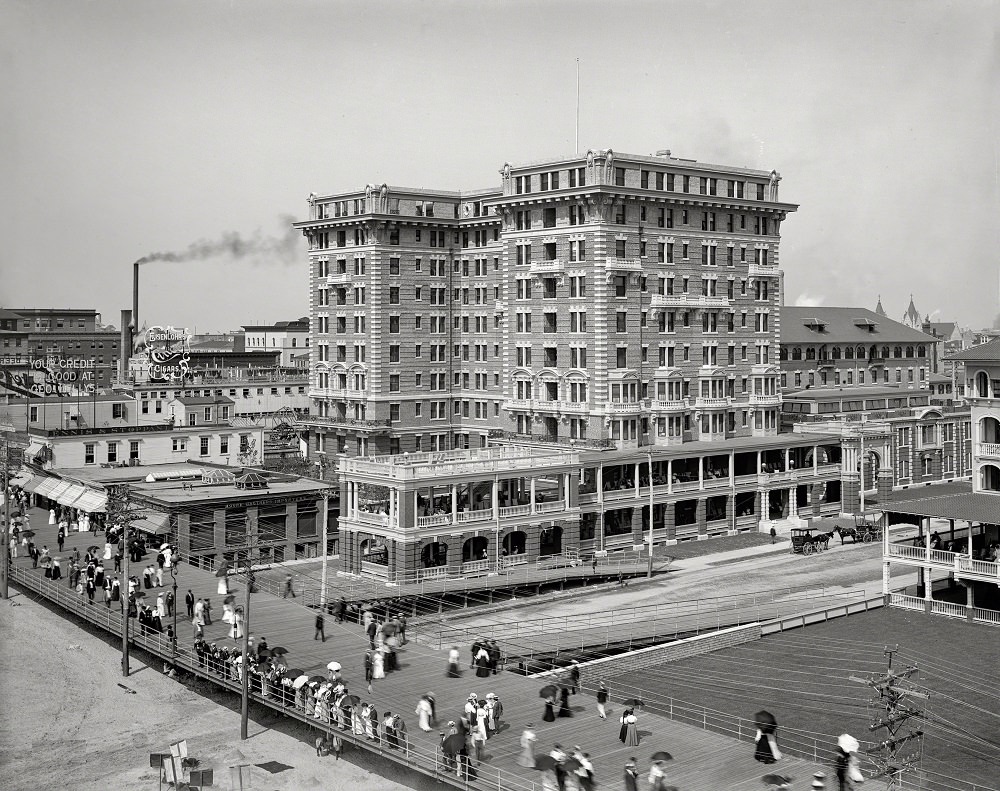
Rising above the Atlantic City boardwalk, the Hotel Chalfonte dominates the scene with its multi-story façade, broad verandas, and crisp rows of windows—an unmistakable landmark of the resort city in 1904. The camera angle emphasizes how closely the grand hotel and the famous wooden promenade were tied together, with guests able to step from lodging to leisure in a matter of moments.
Details like railings, covered walkways, and the layered architecture along the shore speak to a built environment designed for crowds and comfort. Along the planked boardwalk below, a steady stream of pedestrians moves past storefronts and awnings, their light clothing and hats suggesting a day meant for seaside air and social display. Horse-drawn vehicles wait along the street edge, while signage and rooftops stack into a dense backdrop of businesses catering to visitors.
Even the distant industrial smoke on the horizon hints at the wider economy powering this holiday landscape, where entertainment and modern infrastructure met at the water’s edge. Atlantic City, New Jersey was already shaping its identity as a premier American vacation destination, and scenes like this make that transformation feel immediate and tangible. For anyone researching the history of the Atlantic City Boardwalk, early twentieth-century tourism, or the era of great seaside hotels, this photograph offers a rich snapshot of scale, movement, and ambition. The Chalfonte stands not just as a building, but as a symbol of how architecture, commerce, and public space combined to create a legendary resort experience.