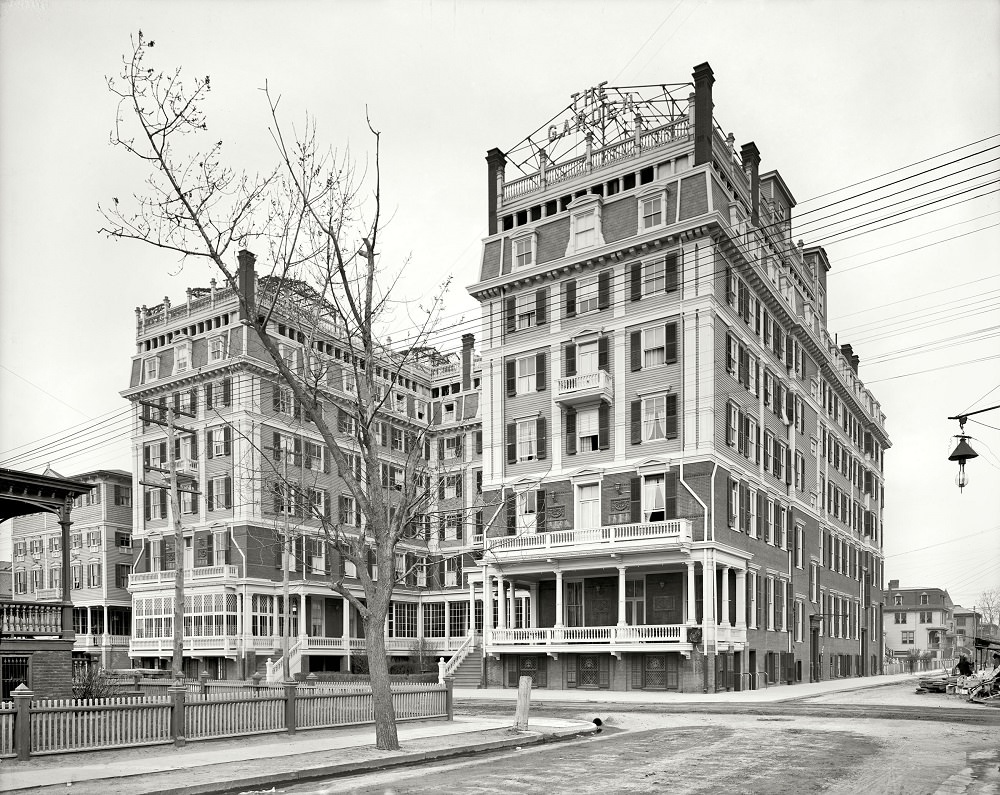
Rising above the quiet street, the Garden Hotel dominates the scene with the confident bulk of a turn-of-the-century Atlantic City resort. Layered porches wrap the lower floors, inviting sea-breeze lounging, while a grid of tall windows and crisp brick-and-trim detailing gives the facade a formal, urban elegance. Overhead utility lines cut across the sky, a reminder that modern conveniences were already threading through America’s great vacation towns in 1904. Along the sidewalks, a bare-limbed tree and neat fencing frame the hotel’s corner like a stage set, emphasizing how carefully these neighborhoods were arranged for guests arriving with trunks and expectations. The building’s rooftop structure and signage hint at the competitive hotel culture of Atlantic City—visibility mattered, and height turned architecture into advertisement. Even without crowds in the foreground, the wide intersections and open approach suggest a district designed for circulation, carriages, and early street traffic. For readers interested in Atlantic City history, early 1900s hotels, or American seaside architecture, this photograph offers a clear look at the scale and ambition of resort development in the era. It captures the Garden Hotel as both a place and a symbol: a temporary home for visitors and a permanent statement of prosperity. Details like the porches, chimneys, and repetitive window bays reward a slow viewing, letting the city’s leisure economy and built environment speak for themselves.