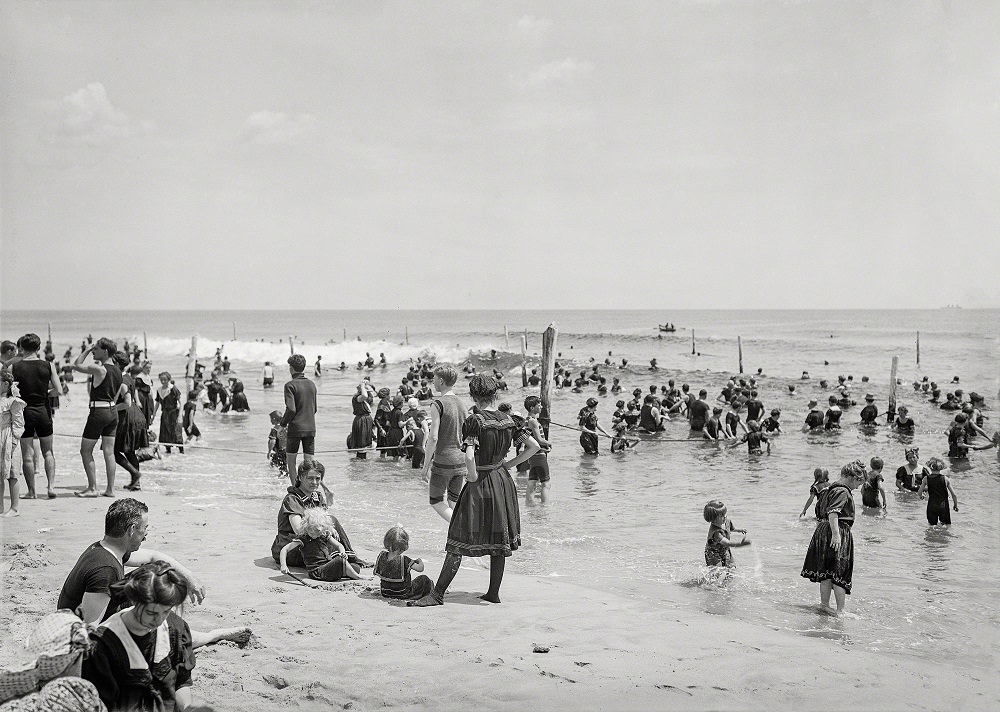
A busy summer shoreline stretches to the horizon, crowded with surf bathers wading in shallow water and gathering in lively clusters along the wet sand. The scene is organized by lines of posts and ropes that mark off bathing areas, hinting at the rules and routines that shaped public swimming in the early 1900s. In the foreground, families settle near the waterline while children play at the edge of the surf, giving the moment a familiar, timeless feel despite its century-old setting. Clothing tells much of the story here, with dark, modest bathing suits and layered garments that reflect the era’s standards of decorum as much as its taste for recreation. Men stand in groups at the left while women and children occupy the center and right, creating a panorama of “places and people” in motion—walking, watching, splashing, and chatting. The open sky and calm sea frame the crowd, and a small boat offshore adds a subtle reminder of the working coastline beyond the holiday mood. Titled “Surf bathers at beach, possibly Atlantic City, 1910,” this photograph invites viewers to imagine the resort culture that drew visitors to Atlantic coast beaches at the dawn of modern tourism. Even without definitive location details, the scale of the crowd and the managed swimming area suggest a popular destination where leisure, public space, and social custom met at the water’s edge. For anyone searching for early 20th-century beach history, bathing fashion, or Atlantic City-era seaside life, it offers a richly detailed window into a day when the surf was entertainment and the shoreline was a stage.