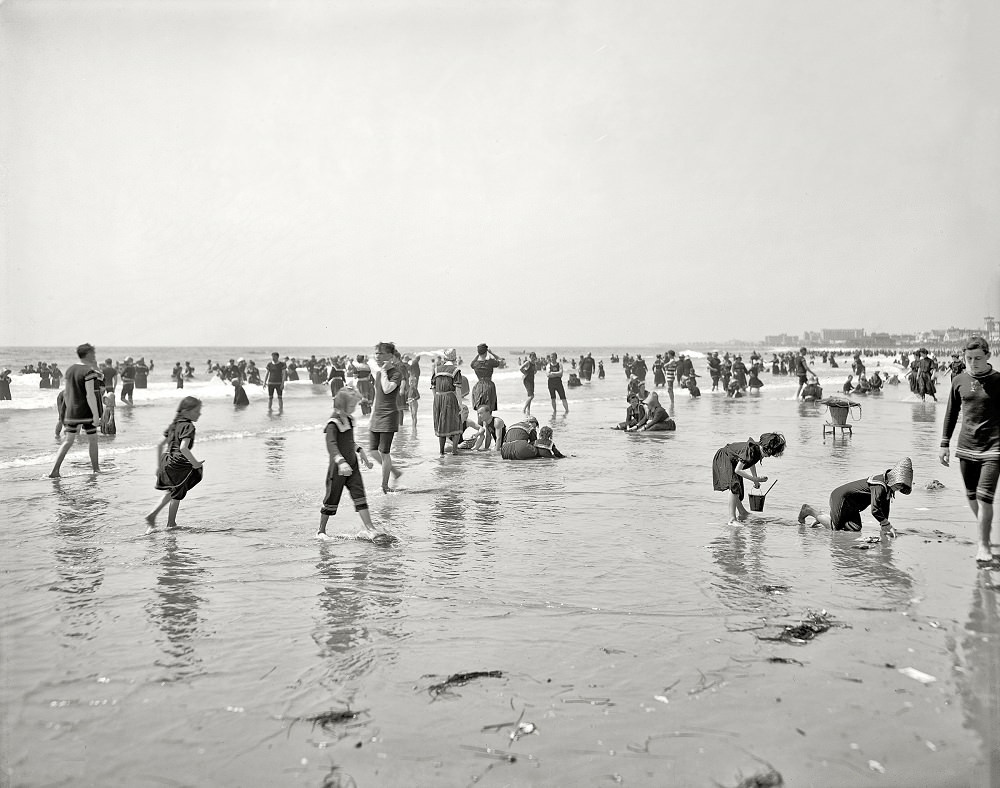
A broad sweep of wet sand and shallow surf opens onto a busy summer scene at Atlantic City, where crowds wade ankle-deep and linger at the waterline. Bathing suits and modest swimwear typical of the early 1900s mingle with everyday clothing, hinting at a time when the seaside was as much a public promenade as a place to swim. Farther out, figures cluster in the gentle waves, creating a lively horizon of motion against the flat Atlantic. Closer to the camera, children bend to their play—one with a small pail, another crouched low as if searching for shells or treasures in the receding foam. Adults stand watchfully nearby, chatting or taking in the view, while the reflective sheen of the beach mirrors legs and hems like a natural glass. The scene feels communal and unhurried, capturing the Jersey Shore as a shared stage where leisure, curiosity, and social ritual overlap. In the distance, low buildings and seaside structures trace the edge of the coast, a subtle reminder of Atlantic City’s rise as a resort destination around 1905. The photograph offers more than nostalgia; it documents how people occupied public space, how they dressed for recreation, and how the shoreline served as an accessible escape from city life. For anyone exploring Atlantic City history, early 20th-century beach culture, or the roots of American vacation travel, this image is a vivid window onto Places & People at the water’s edge.