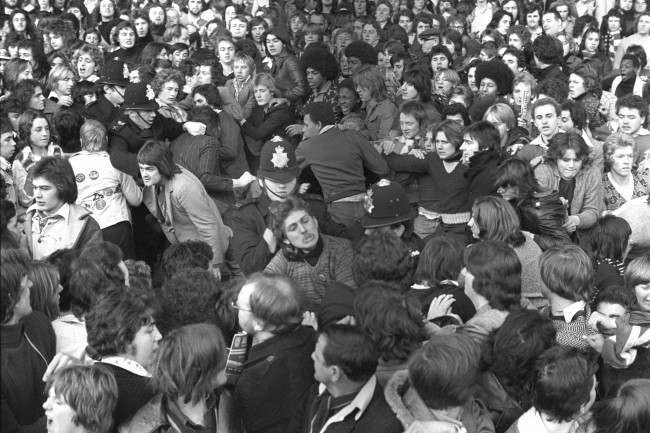
Outside Highbury in the 1970s, matchday anticipation spills into sheer density as supporters press shoulder to shoulder, faces turned in every direction and tempers close to the surface. Police in traditional helmets and uniforms form a hard line amid the crush, arms outstretched to hold space where there barely is any. The scene has the charged, communal energy that surrounded Arsenal vs Manchester United long before modern ticketing, stewarding, and turnstile technology reshaped the ritual.
Crowd control becomes the story here, not through barriers and signage, but through human bodies negotiating movement in real time. Young fans in heavy coats and scarves lean forward, some smiling, others grimacing, as the mass behind them pushes and ripples. Every detail—the clenched hands, the half-turned shoulders, the watchful officers—speaks to how football culture once depended on improvisation at the gates as much as it did on the pitch.
Memories of Highbury often focus on the stadium’s elegance and the roar from the stands, yet photographs like this anchor the experience in the streets and bottlenecks that framed the day. For anyone searching Arsenal history, Manchester United rivalry, or 1970s English football crowds, it’s a vivid reminder of a louder, rougher era when policing and fandom were locked in a constant negotiation. The image preserves a moment of tension and excitement just before kickoff, when thousands tried to become one voice—sometimes all at once.