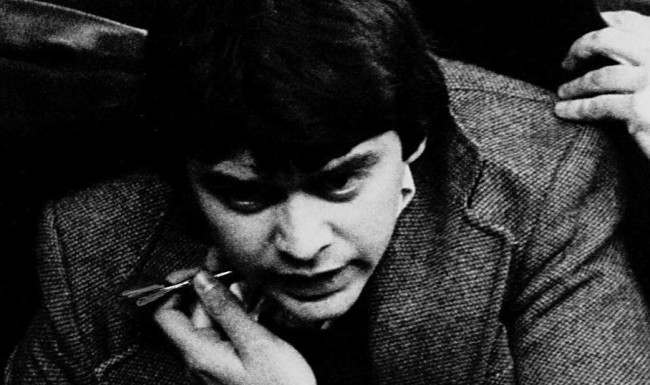
Pressed close to the ground, a young man in a heavy jacket stares up toward the lens while a hand clamps down at his shoulder, the frame cropped so tight it feels like you’ve been pulled into the struggle. The grainy black-and-white texture turns fabric, skin, and shadow into rough evidence, and the small detail of a cigarette pinched between fingers adds an everyday normality to a moment that is anything but calm. It’s an intimate glimpse of how quickly an ordinary matchday could tip into confrontation.
British football hooliganism in the 1970s through the 1990s produced scenes like this—sudden surges, forced detentions, and policing that played out in streets, turnstiles, and tight corridors where tempers flared. The era’s documentary photography often avoided the wide stadium panorama and instead focused on faces, hands, and bodies, making authority and resistance read in the simplest gestures. In photographs such as these, the spectacle isn’t the game; it’s the fraught choreography between police control and crowd defiance.
For readers drawn to social history, these vintage sports photos offer more than shock value: they hint at the anxieties, identities, and group loyalties that surrounded British football culture at the time. The close-up perspective invites questions about what happened just outside the frame—what sparked the clash, how the crowd responded, and what the aftermath looked like. Taken together, images from this period help map the messy intersection of sport, public order, and youth culture in late-20th-century Britain.