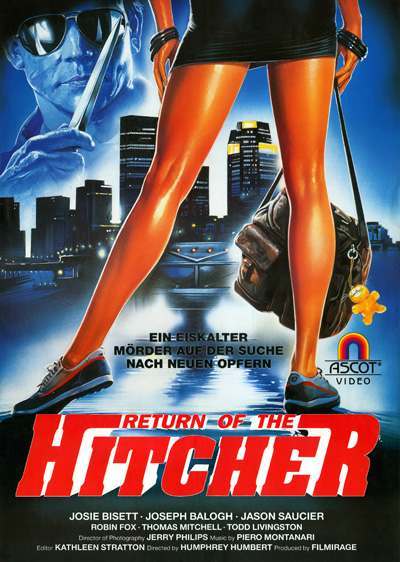
A bold, wide-legged stance dominates the composition, turning a simple posture into a piece of visual shorthand for danger, confidence, and control. Framed from the waist down in glossy, high-contrast color, the figure’s “A-frame” silhouette pulls the eye straight to the center of the poster, where urban night lights and looming shapes heighten the sense of suspense. Even without relying on facial expression, the pose communicates attitude instantly—an approach that has become a cornerstone of fashion imagery and cinematic advertising.
In the background, a blue-tinted face with reflective sunglasses and a blade-like glint reinforces the thriller mood, while the city skyline and car lights suggest movement, pursuit, and an uneasy after-dark world. The contrast between the warm, lacquered tones of the legs and the cold, electric blues behind them creates a striking push-pull that poster designers still chase today. Negative space, exaggerated perspective, and sharp props work together to make the stance feel like a warning sign planted in the foreground.
Modern fashion editorials and movie posters continue to borrow this A-frame influence because it reads clearly at a distance, photographs well from low angles, and turns the body into a graphic element. The pose lends itself to bold typography, dramatic lighting, and narrative implication—perfect for cover art that needs to sell a mood in seconds. As this poster demonstrates, the A-frame is more than a stance; it’s a design strategy that keeps resurfacing wherever style and storytelling collide.