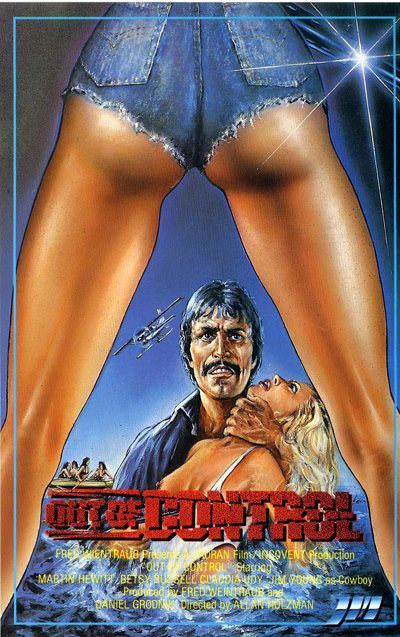
Towering denim-clad legs form a bold A-frame at the center of this cover art, turning the body into an architectural gateway that frames the drama below. The cropped cutoffs, strong lighting, and high-contrast color give the composition a poster-ready punch, where fashion isn’t just wardrobe—it becomes structure, attitude, and headline. Even without pinning it to a specific place or year, the styling signals an era when provocative design and mass-market imagery happily collided.
Beneath that dominant stance, a tense vignette unfolds: a mustached man grips a blonde woman at the neck as she leans back, their faces caught in a moment of peril and spectacle. The typography at the bottom, rendered in heavy, blocky red, reinforces the sensation of impact and urgency, while small illustrated details—like the helicopter—push the scene toward action-movie hyperbole. It’s a classic lesson in visual hierarchy, using the A-frame as both a frame within the frame and a statement of power.
Fashion, art, and film advertising still borrow this pose because it instantly directs the eye and tells a story before a single word is read. The A-frame suggests dominance, desire, threat, or protection depending on what’s placed between the legs, which is why modern editorials, album covers, and contemporary movie posters keep echoing its geometry. For readers interested in the history of visual persuasion, this image serves as a vivid reference point for how an iconic stance can outlive its original context and keep shaping popular culture.