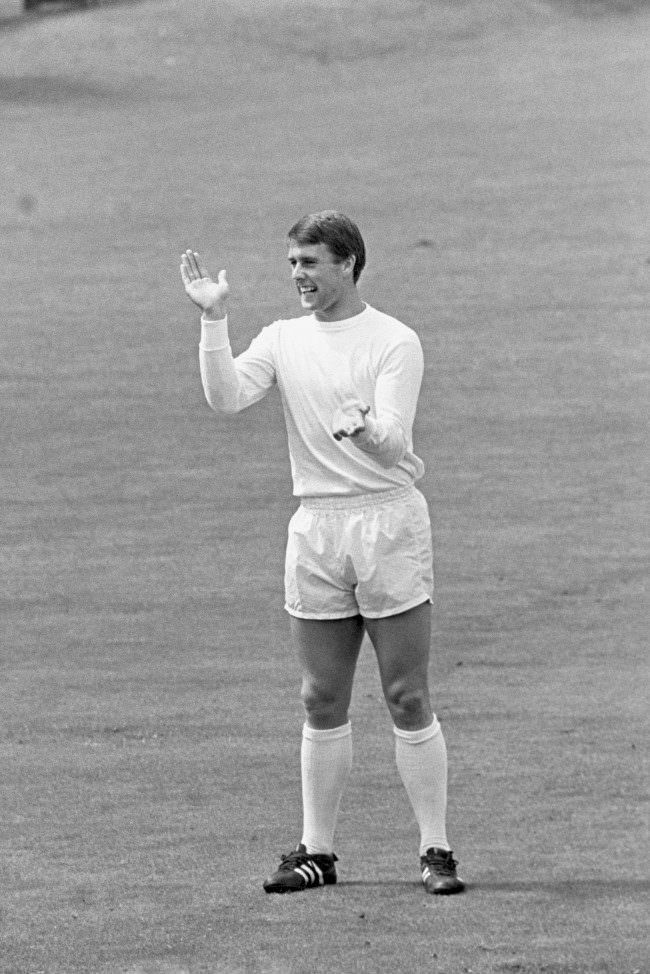
Smiling broadly, England striker Geoff Hurst lifts a hand in approval during a light-hearted cricket outing in 1966, his relaxed stance a world away from the pressure of the football pitch. Dressed in simple training kit and boots on a wide, open field, he looks every bit the sporting all-rounder, enjoying the moment rather than chasing headlines. The gesture feels spontaneous—an athlete acknowledging “nice work” the way teammates do when the stakes are low and the camaraderie is high.
There’s a charm in seeing a footballing figure in a cricketing setting, where the rhythms are slower and the applause can be as casual as a raised palm. The photograph leans into that easy crossover between England’s favourite games, hinting at how sports culture in the 1960s often mixed disciplines in charity matches, friendly fixtures, and informal exhibitions. Even without a crowd in view, the body language suggests shared laughter and a playful competitiveness that needs no scoreboard to make sense.
For readers interested in 1966 England sport, this is a delightful slice of period atmosphere: clean lines, minimal distractions, and a single athlete framed against the expanse of grass. It’s also a reminder that iconic sportsmen were not only defined by big matches, but by these quieter interludes—moments of praise, teamwork, and simple enjoyment. Whether you arrive here for Geoff Hurst, football history, or vintage cricket imagery, the scene offers an authentic, human note amid the mythology of the era.