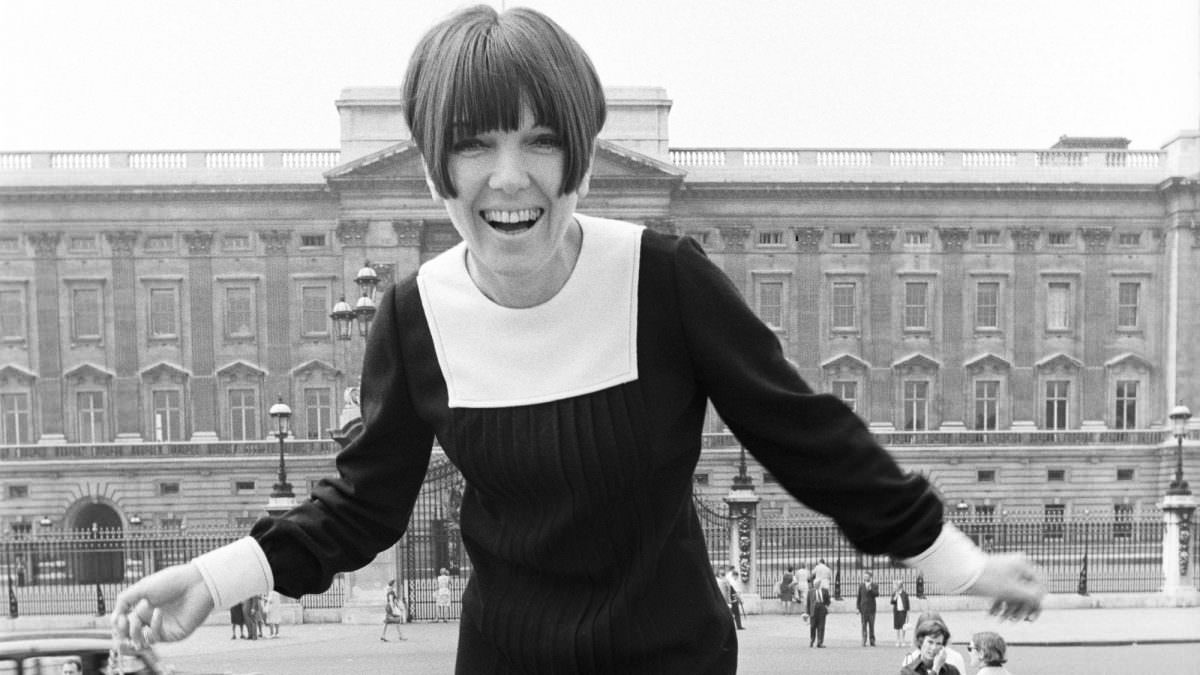
Laughter and confidence radiate from a young woman in a sharply cut, collar-front dress as she leans toward the camera, her sleek bob framing a bright, unguarded smile. The outfit’s crisp white yoke and cuffs pop against the dark fabric, a graphic contrast that reads instantly as Swinging Sixties style. Behind her, an imposing palace façade and iron railings set an unmistakably royal backdrop, turning a playful fashion moment into public spectacle.
The title’s nod to Mary Quant, the King’s Road, and the mini-skirt invites a closer look at how a trend is born—less from a single sketchpad than from a street-level conversation between designers, shop windows, photographers, and the women who wanted clothes that matched their pace. Here, the silhouette feels modern and youthful, designed for movement rather than ceremony, echoing the era’s break with stiff postwar formality. Even without a visible hemline in full view, the image carries the mini’s larger message: freedom, wit, and a refusal to dress for anyone’s rules but one’s own.
Fashion history often argues over “true origins,” yet photographs like this show why the debate persists: style is as much performance as product, amplified by press attention and iconic urban settings. The palace in the background underscores the delicious tension of the 1960s—youth culture posing, quite literally, in front of tradition. For readers searching Mary Quant mini skirt origins, King’s Road fashion, and 1960s London culture, this scene captures the spirit of an idea that spread because it looked alive on real bodies in the real world.