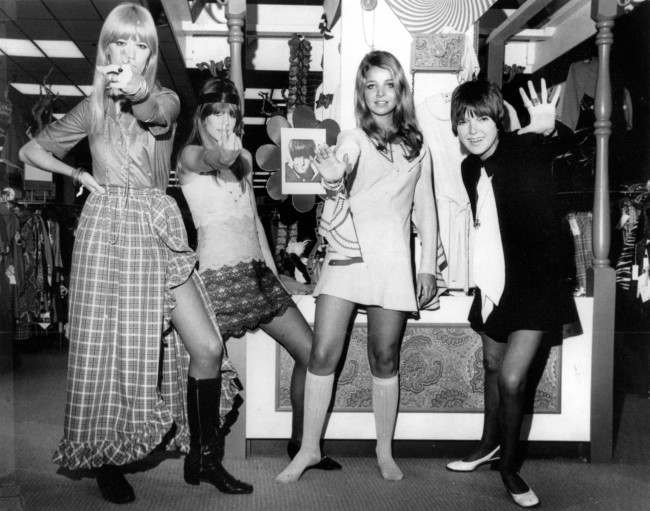
Mary Quant stands to the right with a broad, welcoming wave, framed by three models who mirror the gesture with palms held out toward the lens. From left to right, Amanda Tear, Rory Davis, and Penny Yates pose in a mix of bold late-1960s textures—plaid, lace, and a clean-lined mini dress—balancing playful movement with the directness of a fashion still shot. Their legs-forward stance and easy smiles underline the youthful confidence that made the mini-skirt era feel like a cultural shift, not just a hemline.
Behind them, the boutique interior reads like a small stage set: patterned wall panels, hanging garments, and decorative fixtures that echo the eclectic energy of London fashion retail. The floor-to-ceiling display area and crowded racks suggest a shop designed for browsing and spectacle, where clothes were part of a broader lifestyle—music, art, and attitude included. Even in monochrome, the scene conveys the era’s love of contrast: sharp silhouettes against busy patterns, mod simplicity beside bohemian detail.
Dated Oct. 25, 1968, the photograph lands at the crest of the Swinging Sixties, when Mary Quant’s name was inseparable from King’s Road style and the popularization of the mini skirt. The group’s outward wave feels like an invitation into that moment—an insider glimpse of fashion marketing before social media, when personality and in-store theater helped set trends. For anyone searching the history of 1960s fashion, mod models, and Mary Quant’s cultural impact, this image captures the spirit of a movement that reshaped how young women dressed and were seen.