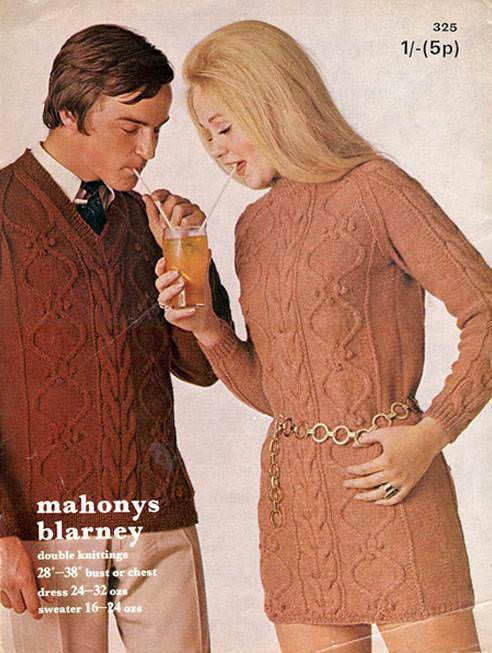
Mahogany and blarney, the caption teases, as two fashion models lean toward the same glass of orange drink, each using a straw in a flirtatious bit of choreography. The man’s cable-knit sweater reads as classic menswear at first glance, but its rich texture and close fit make it feel intentionally tactile, designed to be noticed up close. Beside him, the woman wears a matching knit mini-dress that hugs the body, the raised cables catching light and shadow to emphasize the garment’s sculpted lines.
What sells the moment is how everyday props and intimacy are used to market yarn: the shared sip, the lowered eyes, the almost-private smile. A chain belt sits low at the waist, a period accessory that adds gleam and a hint of bondage-like hardware against the soft, handmade surface. The styling plays on contrasts—cozy craft versus nightclub suggestion—turning domestic skill into something knowingly provocative without needing to say it outright.
Details on the page, including sizing and a small price notation, place this firmly in the world of pattern catalogs and magazine ads where knitting and crochet were packaged as lifestyle. It’s a telling snapshot of 1970s fashion and culture, when liberation showed up not only in hemlines but in the way “home” crafts were reframed as daring, body-conscious, and suggestive. For anyone searching vintage knitting patterns, retro knitwear advertising, or the evolution of sexy handmade fashion, the image captures how a simple cable stitch could be sold with a wink.