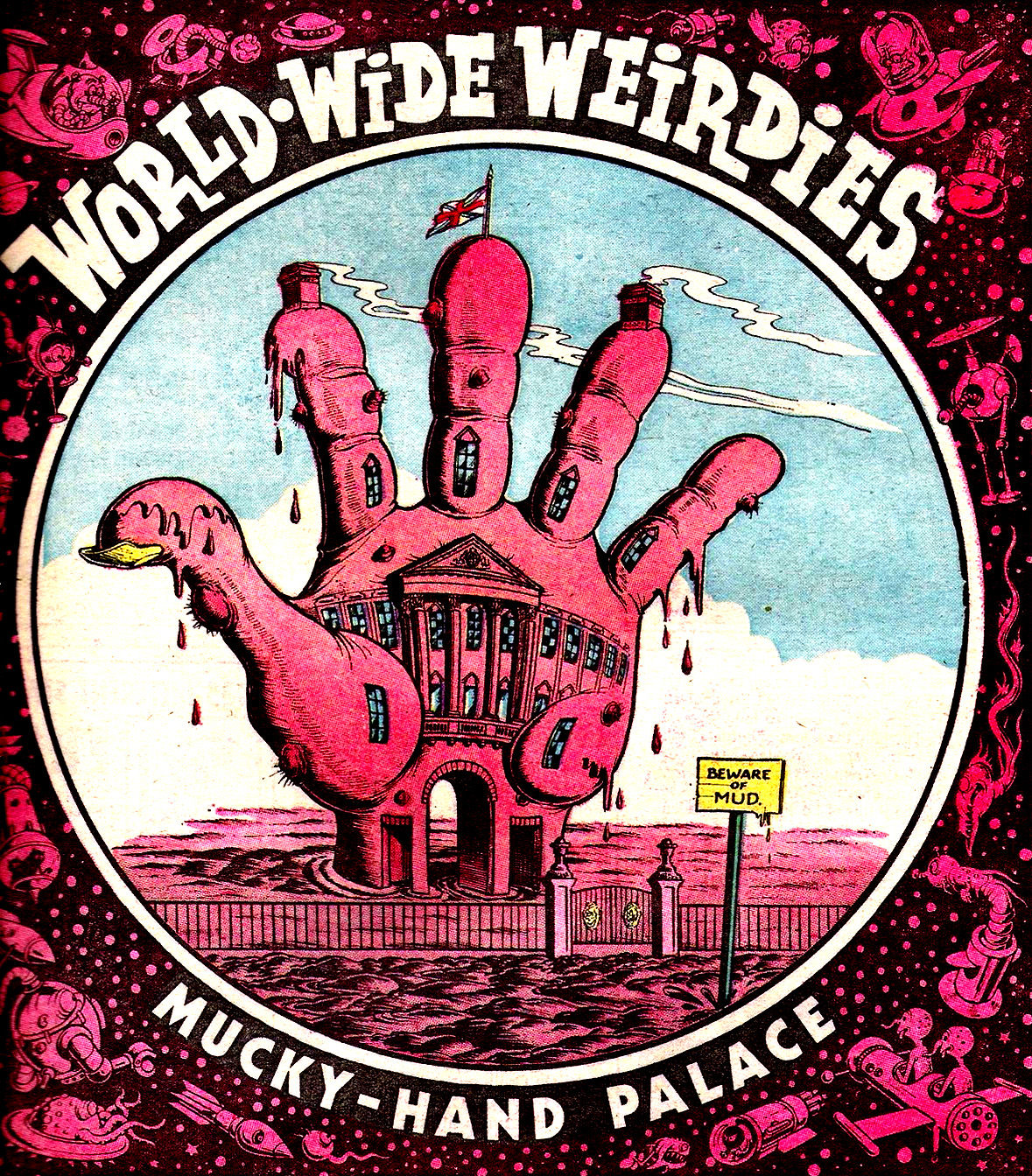
Ken Reid’s “World-Wide Weirdies” invites you into a carnival of the uncanny, where architecture grows flesh and the everyday turns deliciously wrong. Here, a lurid, comic-book palette frames a palace shaped like an upraised hand, each finger sprouting windows like watchful eyes while drips of mud—or something worse—slide from its seams. Even before you read the captioning, the scene broadcasts its mission: to celebrate grotesque invention with bold linework, heavy shading, and a wink that never fully softens the menace.
At the center sits the “Mucky-Hand Palace,” part manor and part monstrous appendage, complete with a formal doorway and a tiny flag perched atop the tallest finger. A warning sign—“BEWARE OF MUD”—stands in the foreground, grounding the absurdity in the language of public notices and making the whole nightmare feel oddly municipal. Around the circular frame, a starry, space-like border teems with floating oddities, reinforcing the “world-wide” promise of strange artifacts and far-flung, feverish imagination.
Collectors of vintage illustration and fans of mid-century comic art will recognize the pleasure of this kind of printed weirdness: exaggerated forms, satirical details, and a sense of gleeful transgression. The artwork reads like a postcard from a parallel tourist attraction, equal parts grotesque and glorious, where the bizarre is marketed as entertainment and danger is reduced to signage. As a piece of historical pop culture ephemera, it offers both a visual jolt and a reminder of how boldly artists once pushed the boundaries of humor, horror, and the fantastic.