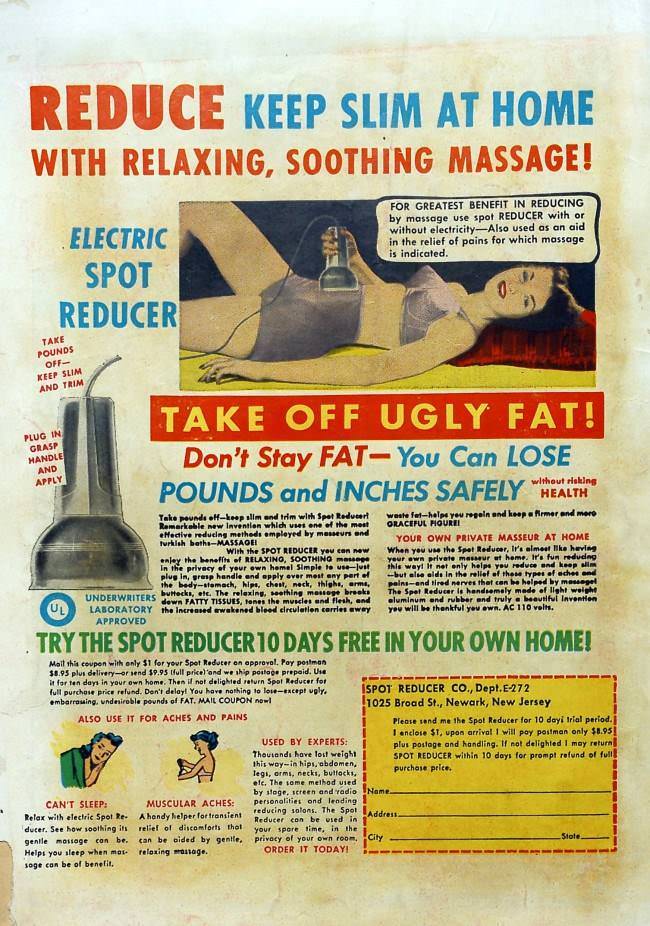
Bold, breathless advertising language leaps off this old print, promising to “reduce” and “keep slim at home” with a relaxing, soothing massage. The centerpiece illustration—an at-ease woman in oversized underwear—leans into the era’s cheeky, salesy confidence, turning private body anxieties into a public spectacle meant to persuade. It’s a reminder of how quickly humor, embarrassment, and aspiration could be packaged together to sell a “solution.”
On the left, the gadget itself is presented like modern science in miniature: an “electric spot reducer” meant to be plugged in, gripped, and applied to targeted areas. The copy shouts about taking off “ugly fat,” frames “pounds and inches” as enemies, and reassures readers with approval-style seals and talk of safety, effectiveness, and home convenience. Even without a clear date on the page, the style and pitch echo mid-century weight-loss marketing—optimistic, urgent, and confident that technology could remake the body.
What makes “Mahoosive knickers model’s own” such a fitting title is the way the ad’s visual joke collides with its serious promise of transformation. Those huge knickers aren’t just a laugh; they’re a symbol of the period’s shifting ideals about femininity, self-discipline, and consumer fixes for personal insecurities. For collectors and history buffs, this piece is a sharp, SEO-friendly window into vintage weight loss ads, home fitness devices, and the long tradition of selling confidence by selling discomfort.