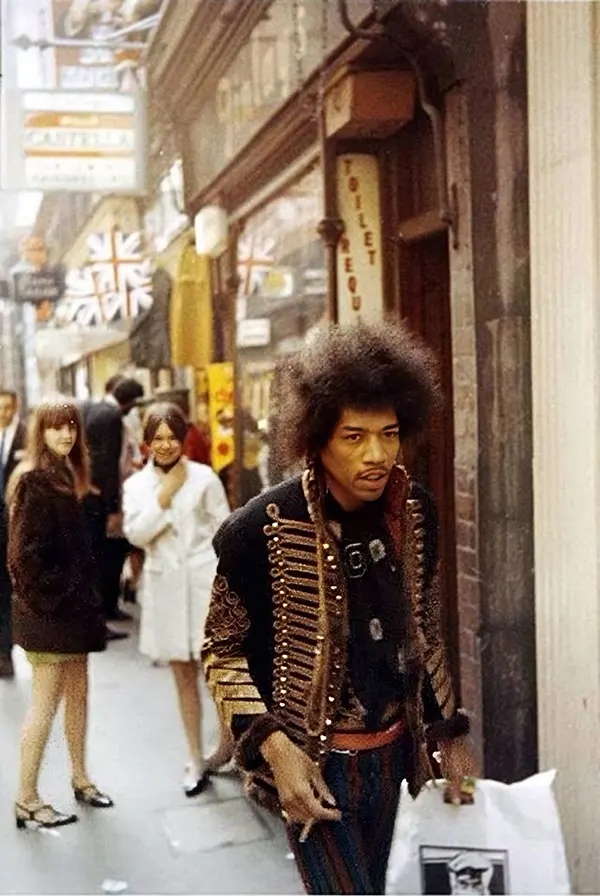
Carnaby Street’s narrow pavement and crowded shopfronts form a vivid stage for Jimi Hendrix in 1967, striding forward with the focused, slightly guarded look of someone used to being watched. Behind him, Mod-era retail signs, window displays, and the press of pedestrians create the unmistakable atmosphere of Swinging London, where music, fashion, and youth culture collided in public view.
Hendrix’s outfit does as much talking as the street itself: a dark, military-inspired jacket dense with braided trim and ornate detailing, paired with vivid trousers that echo the era’s love of color and spectacle. His hair, worn in a full, natural halo, reads like both personal signature and cultural statement, turning a simple walk into an image that still fuels searches for 1960s men’s style, rock fashion, and Carnaby Street history.
In the background, onlookers pause mid-step, a reminder that celebrity in the 1960s often unfolded at street level—unfiltered, immediate, and intertwined with the city’s retail theatre. The photograph holds a particular kind of energy: London as a fashion capital, Hendrix as a transatlantic style icon, and a moment when everyday shopping streets doubled as runways for the counterculture.