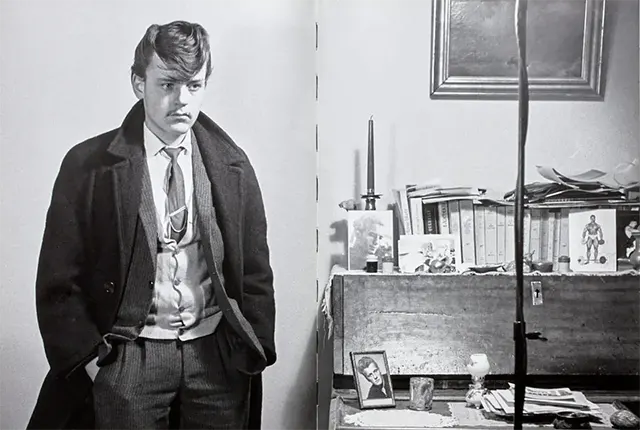
Leaning against a plain interior wall, the young man’s guarded expression and carefully sculpted hair do as much talking as his clothes. A long, heavy overcoat hangs open to reveal a tidy suit, narrow tie, and a chain at the waist—details that read as deliberate, not accidental, and that fit the Halbstarken reputation for turning everyday menswear into a statement. Hands in pockets, shoulders slightly forward, he projects the quiet defiance and self-possession that made this postwar youth style so memorable.
On the right, a cluttered dresser or sideboard anchors the scene in ordinary domestic life: stacked books, framed photos, a candleholder, and small keepsakes crowd the surface. That contrast—rebellious posture beside homely objects—highlights how youth culture often grew within the confines of family rooms and rented flats, not just on street corners. Even without a visible cityscape, the room’s modest furnishings suggest the setting of a working or lower-middle household where fashion became a personal form of escape and identity.
Halbstarken style is often remembered through leather jackets and swagger, but this image reminds us how sharp tailoring and grooming also carried the message. The coat’s broad collar, the suit’s clean lines, and the intentionally “done” hair mirror a wider mid-century shift toward youth-driven fashion and attitude, influenced by cinema, music, and peer culture. For anyone searching vintage fashion history, German youth subcultures, or mid-century menswear, the photograph offers a crisp, intimate glimpse of how bold choices could be made with nothing more than cloth, posture, and stare.