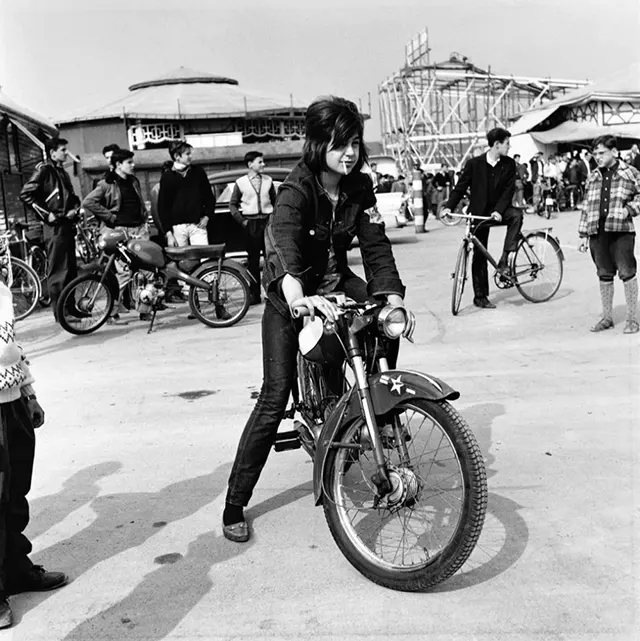
Leaning into the handlebars of a small motorbike, a young rider in a dark denim jacket and slim trousers commands the center of the frame with a cool, defiant poise. A cigarette hangs casually from their lips, hair swept up in a dramatic, rock‑and‑roll silhouette that reads instantly as youth culture on the move. The sharp contrasts of the photo emphasize texture—sturdy workwear fabric, polished metal, and the gritty pavement beneath the wheels.
Around this figure, other teenagers and young adults linger with bicycles and mopeds, forming an informal audience that feels part street corner, part social club. Their clothes skew practical yet pointed: fitted jackets, rolled sleeves, sturdy shoes, and the kind of everyday garments made expressive through attitude and styling. In the background, fairground-like structures and a broad open space suggest leisure time and public visibility—exactly the setting where “Halbstarken” fashion could be performed, noticed, and copied.
Rather than high fashion, the appeal here comes from rebellion in affordable pieces—denim, leather-like outerwear, and the unmistakable language of speed and machines. The photo speaks to postwar European youth style and the rise of subcultures that used haircuts, cigarettes, and two-wheeled vehicles as symbols of independence. As a slice of fashion and culture, it captures how a generation turned ordinary clothing into a bold statement, staging identity in public with every look and every ride.