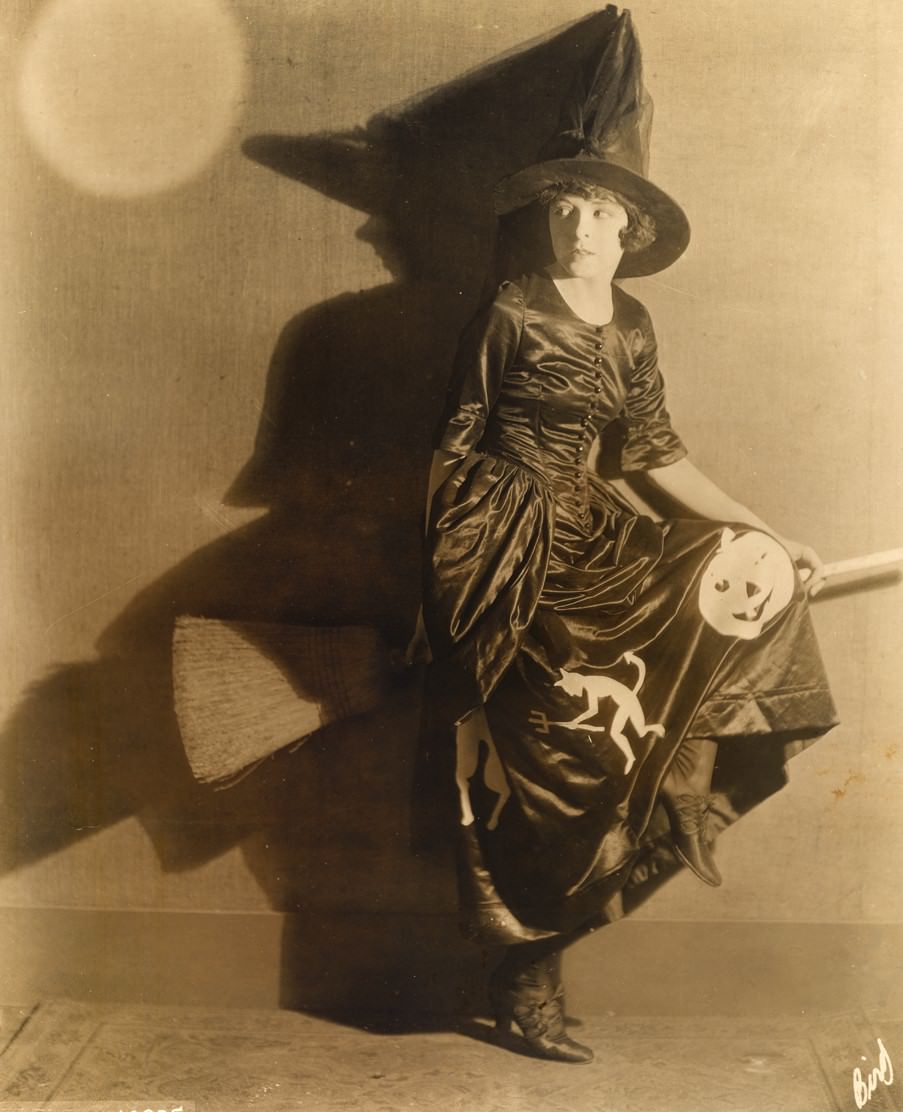
Colleen Moore poses in 1920 with a theatrical witch’s hat tilting over her bobbed hair, the brim casting a dramatic shadow that stretches across the studio wall. A broom juts from behind her, and she perches sideways with an easy, stage-ready poise, turning her gaze off-frame as if caught mid-scene. The soft, sepia lighting and deliberate negative space heighten the silhouette, making the costume’s outline as memorable as the actress herself.
Her satin-like gown gathers in deep folds, fastened down the front and decorated near the hem with bold, high-contrast motifs that read as playful “spells” in fabric and appliqué. In one hand she holds a grinning jack-o’-lantern mask, a prop that links old-world witchcraft to the newer, commercial Halloween imagery emerging in early twentieth-century popular culture. The overall styling—part glamour portrait, part novelty character study—speaks to silent-era publicity’s love of themed masquerade.
Beneath the whimsy lies a snapshot of 1920s fashion and screen culture learning to flirt with the spooky: folklore repackaged as chic entertainment, sensuality softened by humor, and star persona shaped through costume. The photograph works as an early example of how film sirens helped normalize seasonal fantasy in mainstream media, using studio craft to turn shadow, satin, and suggestion into a single arresting tableau. For collectors and historians, it remains a striking vintage Hollywood Halloween image—one that marries celebrity portraiture with the decade’s appetite for stylish spectacle.