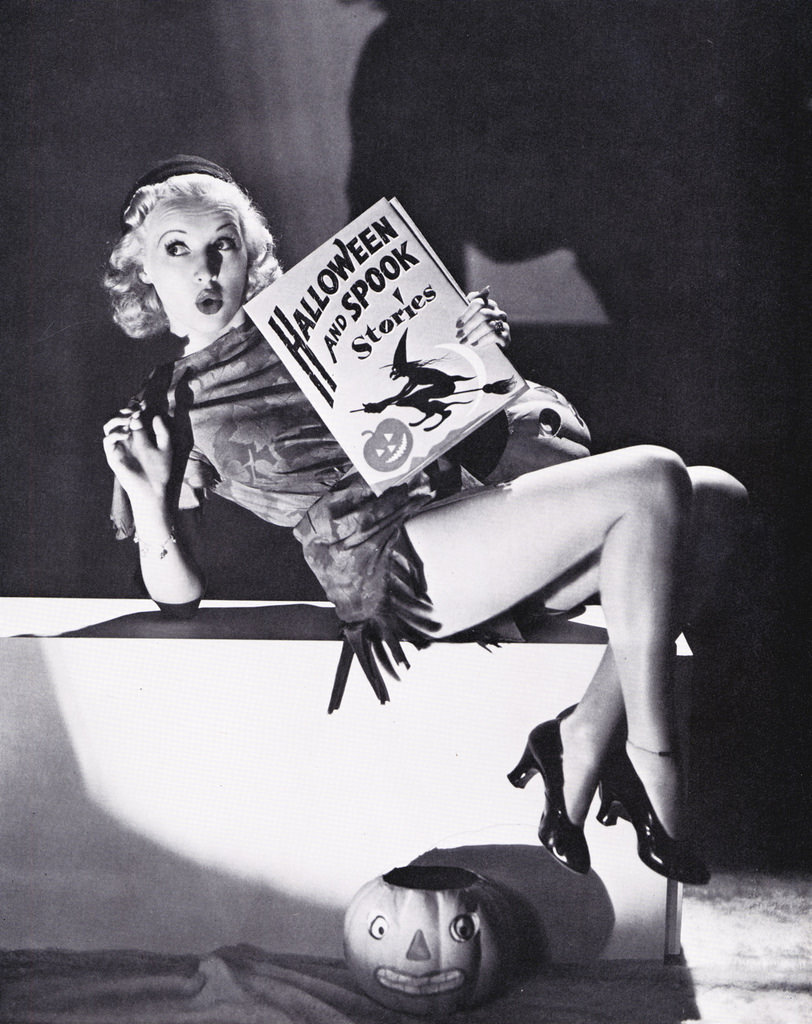
Perched on a studio set with her legs crossed and a cigarette poised between her fingers, Betty Grable leans into a playful moment of 1930s glamour. Her expression is wide-eyed and theatrical, as if caught mid-gasp, while dramatic lighting throws crisp shadows that heighten the sense of mischief. The styling—soft, sculpted curls, a small cap, and high-heeled pumps—signals classic Hollywood pin-up polish with a wink.
Clutched against her torso is a bold prop book titled “Halloween and Spook Stories,” its cover illustrated with a witch on a broom and a grinning jack-o’-lantern. The seasonal theme is echoed below, where a carved pumpkin sits at her feet, adding a touch of eerie humor to an otherwise sleek, staged composition. Together, the cigarette smoke suggestion, the shadowy backdrop, and the oversized Halloween graphics create a seductive-yet-silly “spooky spirit” that fits the era’s love of novelty publicity shots.
Hollywood in the interwar years often blurred the line between fright and flirtation, and this image sits squarely in that tradition of Halloween-themed vintage photography. It’s a compact lesson in 1930s fashion and pop culture: star power, studio lighting, and a carefully chosen set of props designed to sell personality as much as beauty. For collectors and fans of classic cinema aesthetics, the photograph offers an enduring snapshot of how screen sirens could make even a witchy motif feel irresistibly chic.