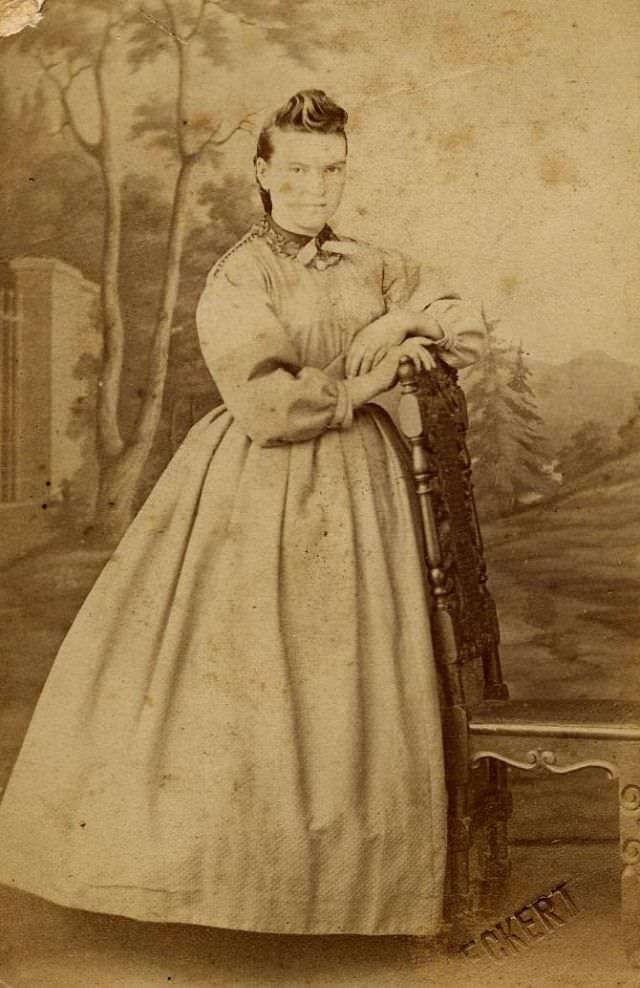
A young girl stands poised beside an ornate chair, her arms resting with practiced composure as she meets the camera’s gaze. The studio backdrop—trees, distant scenery, and a suggestion of architecture—frames her as if she were outdoors, a popular Victorian illusion that lent portraits a romantic, cultured air. The warm sepia tones and soft focus add to the sense of a carefully staged moment intended to preserve respectability as much as likeness.
Her clothing offers a vivid glimpse into Victorian girls’ fashion of the 1860s, when childhood dress often echoed adult silhouettes. A full, bell-shaped skirt dominates the figure, likely supported by layers beneath to achieve that fashionable volume, while the bodice sits neatly above a defined waist. Small details—long sleeves gathered at the wrist and a dark, high collar or neck adornment—signal the era’s preference for modesty and tidy finish, with fabric and fit communicating family aspirations as clearly as any expression.
Portraits like this double as fashion history, showing how trends reached everyday lives through dressmaking, hand-sewn trims, and the disciplined posture taught to young sitters. Even without a named place or date on the card, the combination of crinoline-like fullness, refined neckline, and studio props anchors the scene in mid-19th-century Victorian culture. For anyone searching women’s and girls’ clothing history, this image is a small but telling record of how the 1860s ideal of propriety was worn, posed, and remembered.