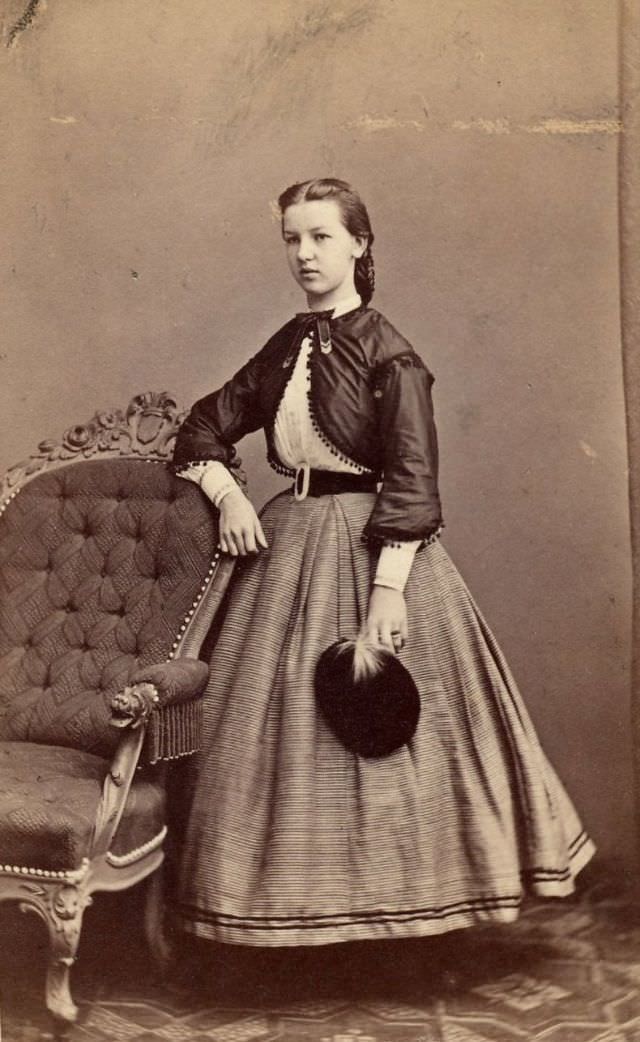
Poised beside an ornate, tufted chair, a young Victorian girl stands with the composed seriousness common to mid-19th-century studio portraits. Her hair is neatly parted and drawn back, and the plain backdrop keeps attention on silhouette, posture, and dress—exactly the elements families wished to preserve when commissioning a formal photograph.
Fashion details speak clearly to 1860s girls’ clothing: a fitted bodice over a full, bell-shaped skirt, likely supported by crinoline or structured petticoats. The contrasting jacket-like oversleeves and the crisp white underlayer create a sharp, respectable look, while trim and buttons add texture without excess. A narrow belt cinches the waist, and the long sleeves with white cuffs reinforce the era’s preference for modesty and careful finishing.
In her hand, a dark hat accented with a soft plume adds a touch of youth and gentility, hinting at etiquette and public appearance as much as personal taste. The combination of tailored upper garments, expansive skirt, and carefully chosen accessories offers a window into Victorian fashion and culture—where even a girl’s wardrobe mirrored adult ideals of refinement, discipline, and social standing. Preserved in this studio setting, the portrait becomes more than a likeness; it is a record of how the 1860s wanted girlhood to look.