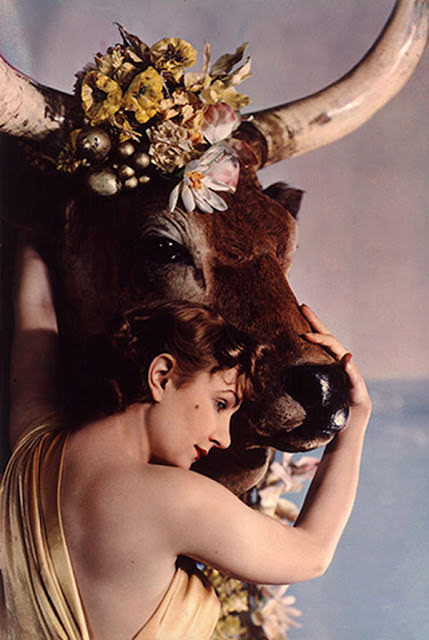
Draped in a pale, satin-like gown that slips over one shoulder, Baroness Gagern leans into the warm bulk of a bull, her cheek pressed close as if listening for a heartbeat beneath the hide. The animal’s sweeping horns arc across the frame like a ceremonial arch, crowned with an abundant cluster of flowers that turns the creature into a living altar. Soft studio lighting and carefully controlled color give the scene a dreamlike finish, balancing theatrical artifice with an uncanny sense of intimacy.
Europa’s myth is suggested rather than spelled out: not a narrative of pursuit, but a poised moment of surrender and trust, rendered through gesture and texture. The baroness’s hand rests along the bull’s muzzle, and the composition draws the eye from her downcast gaze to the dark, reflective nose, then up to the floral headdress—an elegant loop that echoes the old story in modern, fashion-forward language. The background fades into a calm, open blue, keeping attention on skin, fabric, horn, and blossom, and heightening the tableau’s statuesque stillness.
As part of Madame Yevonde’s celebrated “Goddesses” series of 1930s color portraits, this image stands at the crossroads of mythological costume, society portraiture, and early glamour photography. Its saturated hues and sculptural posing showcase how classical themes could be reinvented for modern taste, making antiquity feel at once chic and emotionally charged. For readers interested in 1930s fashion and culture, staged studio photography, and the enduring iconography of Europa, the photograph remains a striking example of how color and concept could transform a portrait into a legend.