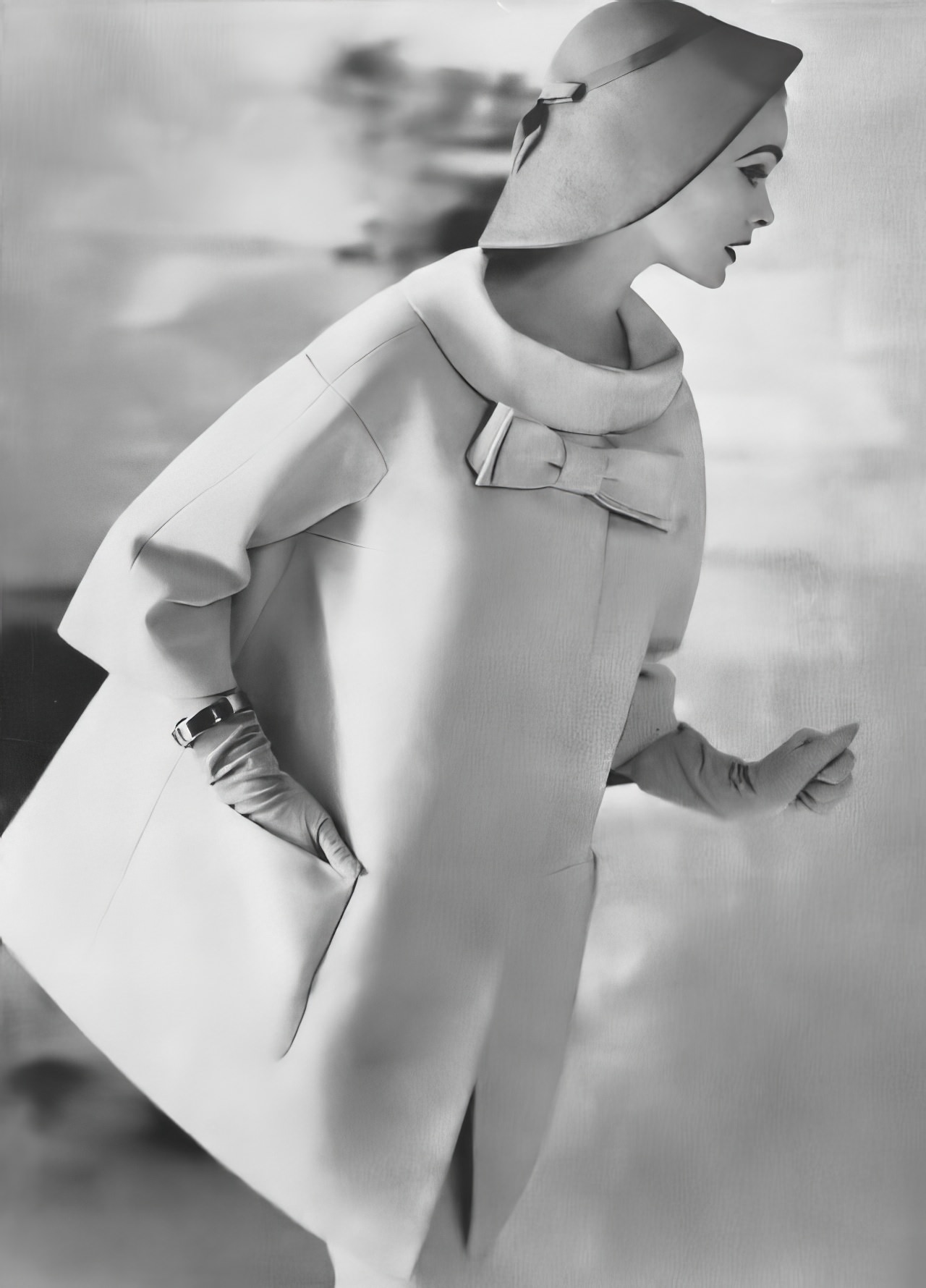
Side-lit and poised in profile, Susan Abraham leans into the frame as if caught mid-stride, her expression focused and coolly self-possessed. The champagne-colored coat in linen hopsack reads as sculptural rather than fussy, with clean seams, a wide rolled collar, and a prominent bow detail that anchors the chest. Long gloves and a slim bracelet add a crisp note of polish, while the softly blurred background keeps attention on the garment’s form and the model’s elegant line.
What makes this 1957 fashion image feel so modern is its emphasis on shape and movement over ornament. The coat’s generous cut suggests comfort and confidence, yet the tailoring keeps it controlled, presenting that mid-century balance between practicality and glamour. Light glides across the textured fabric, giving the hopsack weave a subtle presence that would have been legible to editors and shoppers scanning for luxury in new materials.
A portrait like this belongs to the broader story of 1950s fashion culture, when models became icons of attitude as much as fit. Abraham’s stylized headwear and sharply defined profile evoke the era’s fascination with refined silhouettes, from couture runways to magazine pages and department-store campaigns. For collectors and historians, the photograph serves as a strong reference point for 1957 outerwear—champagne tones, architectural collars, and the understated drama that made mid-century style endure.