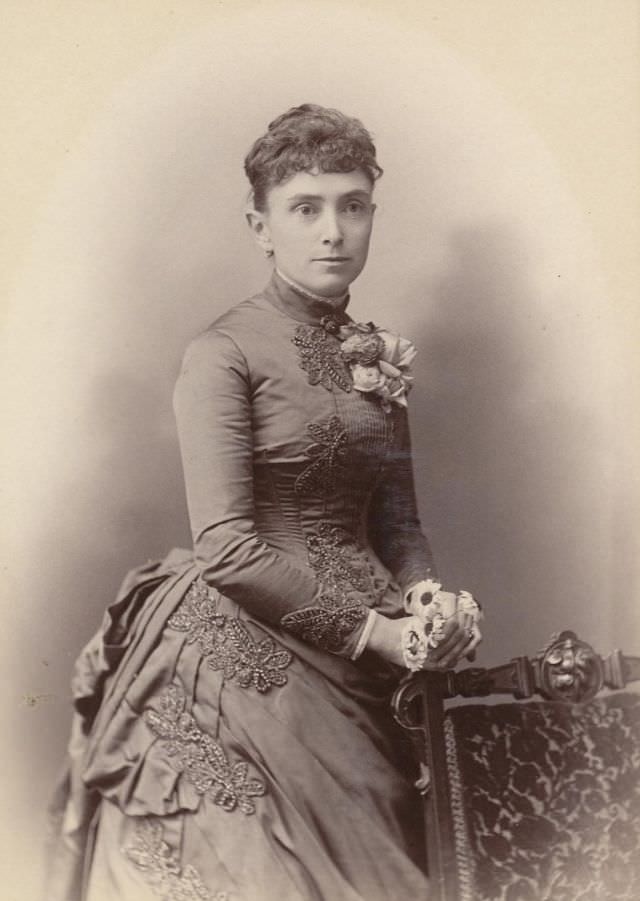
Poised beside an ornate studio chair, a young woman meets the camera with a calm, direct gaze that feels unmistakably late nineteenth century. Her dark dress—described simply as “black,” though rendered in soft photographic tones—fits closely through the bodice and sleeves, then opens into a full skirt arranged in careful folds. The plain backdrop and controlled lighting place all attention on her posture and expression, giving the portrait the formal, composed look associated with San Francisco studio photography of the era.
Details of the gown reward a longer look: intricate trim and embroidered flourishes climb the front and edge the skirt, while a high collar frames the neck in the modest, tailored fashion popular in the 1890s. A cluster of flowers at her chest acts like a statement brooch, echoed by the small bouquet held at her waist, blending elegance with a hint of softness. Her hair is swept up and forward in a restrained style, complementing the dress’s structured silhouette rather than competing with it.
As a piece of fashion and culture, the portrait speaks to how women used clothing, accessories, and controlled studio settings to present respectability and status in a growing West Coast city. “Lady in black, San Francisco, California” reads today as both personal likeness and visual document: the craftsmanship of the fabric, the decorative embellishments, and the careful arrangement of hands and shoulders all suggest deliberate self-presentation. For anyone exploring 1890s women’s fashion, Victorian-era portraiture, or San Francisco social history, the image offers a vivid glimpse into the aesthetics of the period without needing words beyond what the sitter chose to wear.